
Corporate Insurance Dubai
Comprehensive Risk Protection for Businesses
Corporate Insurance in Dubai is essential for protecting businesses against operational, financial, legal, and employee-related risks. In a fast-growing and highly regulated business environment, having the right insurance is not just good practice it is often a legal and contractual necessity.
From employee health insurance to liability and property protection, corporate insurance helps businesses remain compliant, financially secure, and resilient against unexpected disruptions that could impact operations, reputation, or long-term growth.
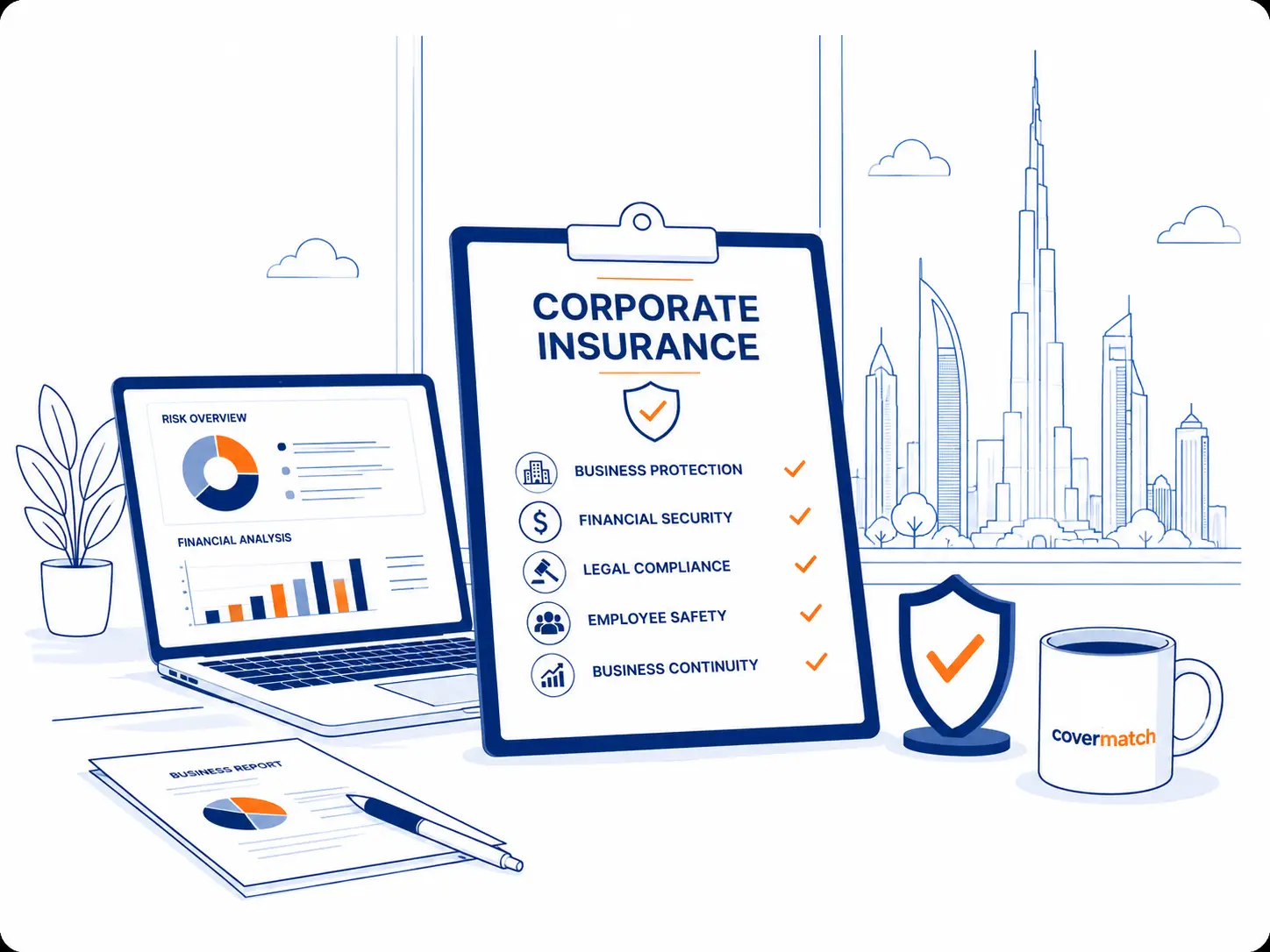
Why Corporate Insurance Matters
- ✓Protection against financial and legal liabilities
- ✓Compliance with UAE regulatory and requirements
- ✓Business continuity during unexpected risks
What Is Corporate Insurance?
Corporate insurance refers to a range of insurance policies designed to protect businesses, companies, and organisations from risks arising from their day-to-day operations and professional activities.
These risks may relate to business operations, employees, clients and third parties, physical assets, professional services, and potential legal liabilities. Corporate insurance acts as a financial safeguard against unexpected losses, claims, or disruptions.
Unlike personal insurance, corporate insurance is customised based on the nature, size, industry, and risk exposure of a business—ensuring tailored protection that aligns with regulatory requirements and operational realities.
Who Needs Corporate Insurance in Dubai
Corporate insurance is relevant for businesses across industries and company sizes, including:
Startups & SMEs
Protect growing businesses from operational, legal, and financial risks during early and expansion stages.
Large Corporations
Comprehensive coverage for complex operations, assets, employees, and regulatory exposure.
Free Zone Companies
Tailored insurance solutions aligned with free zone regulations and business activities.
Mainland Businesses
Mandatory and optional covers to meet mainland compliance and operational risk needs.
Professional Firms
Ideal for consultants, auditors, engineers, doctors, and advisors requiring liability protection.
Retailers, Manufacturers & Service Providers
Covers risks related to property, employees, customers, supply chains, and daily operations.
Any company operating in Dubai—regardless of size—faces risks that corporate insurance helps mitigate.
Is Corporate Insurance Mandatory in Dubai?
Certain corporate insurance covers are mandatory under Dubai and UAE regulations.
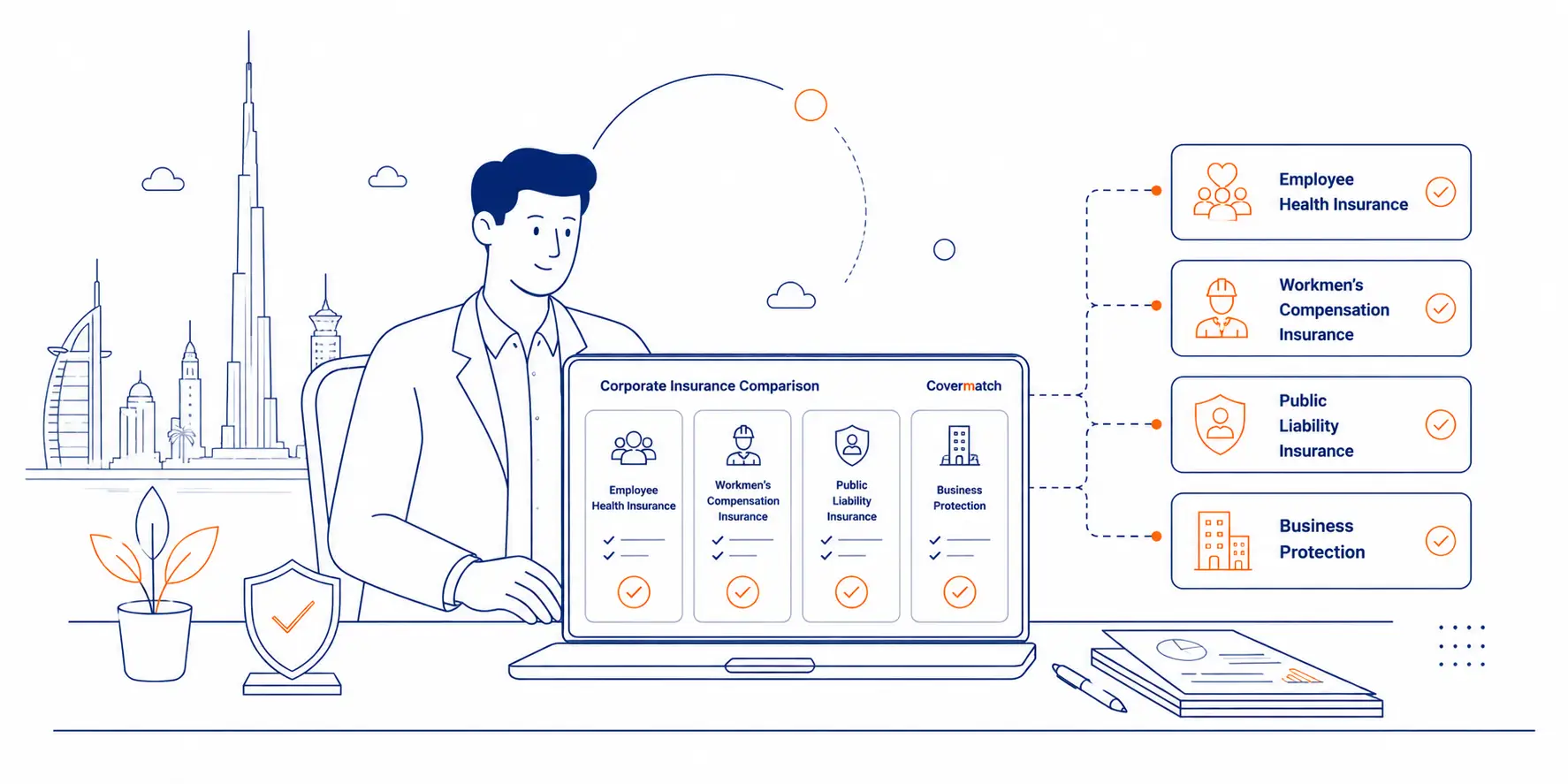
Businesses operating in Dubai are legally required to maintain specific insurance policies to protect employees and meet regulatory compliance.
Mandatory corporate insurance covers include:
- Employee Health Insurance
- Workmen’s Compensation / Employee Injury Cover
Failure to maintain mandatory insurance can result in fines, visa issues, or legal liability.
Key Types of Corporate Insurance in Dubai
Group Health Insurance
Group health insurance is mandatory for employees in Dubai. Employers must provide compliant medical insurance to all eligible staff.
- • Out-patient treatment
- • In-patient hospitalisation
- • Emergency medical care
This ensures employee welfare and regulatory compliance.
Workmen’s Compensation Insurance
This policy protects employers against liabilities arising from:
- • Workplace injuries
- • Occupational illnesses
- • Accidents during work
It covers medical expenses, compensation, and legal costs related to employee injuries.
Professional Indemnity Insurance
Protects businesses against claims arising from:
- • Professional negligence
- • Errors or omissions
- • Breach of professional duty
This is critical for consultants, engineers, doctors, architects, IT firms, and advisory businesses.
Public Liability Insurance
Covers claims arising from:
- • Injury to third parties
- • Property damage caused to others
- • Accidents at business premises
It is essential for businesses interacting with customers or the public.
Employer’s Liability Insurance
Protects companies against employee claims related to:
- • Work-related injuries
- • Occupational diseases
- • Negligence claims
This cover complements workmen’s compensation insurance.
Property & Asset Insurance
Covers business assets such as:
- • Office premises
- • Machinery and equipment
- • Inventory and stock
- • Furniture and fixtures
It protects against risks like fire, flood, theft, and natural disasters.
Cyber Insurance
Protects businesses from digital risks including:
- • Data breaches
- • Cyber-attacks
- • Ransomware incidents
- • Loss of customer data
With increasing digital dependence, cyber insurance is becoming crucial for businesses in Dubai.
Corporate Insurance for SMEs & Startups
Startups and small businesses often underestimate operational and financial risks.
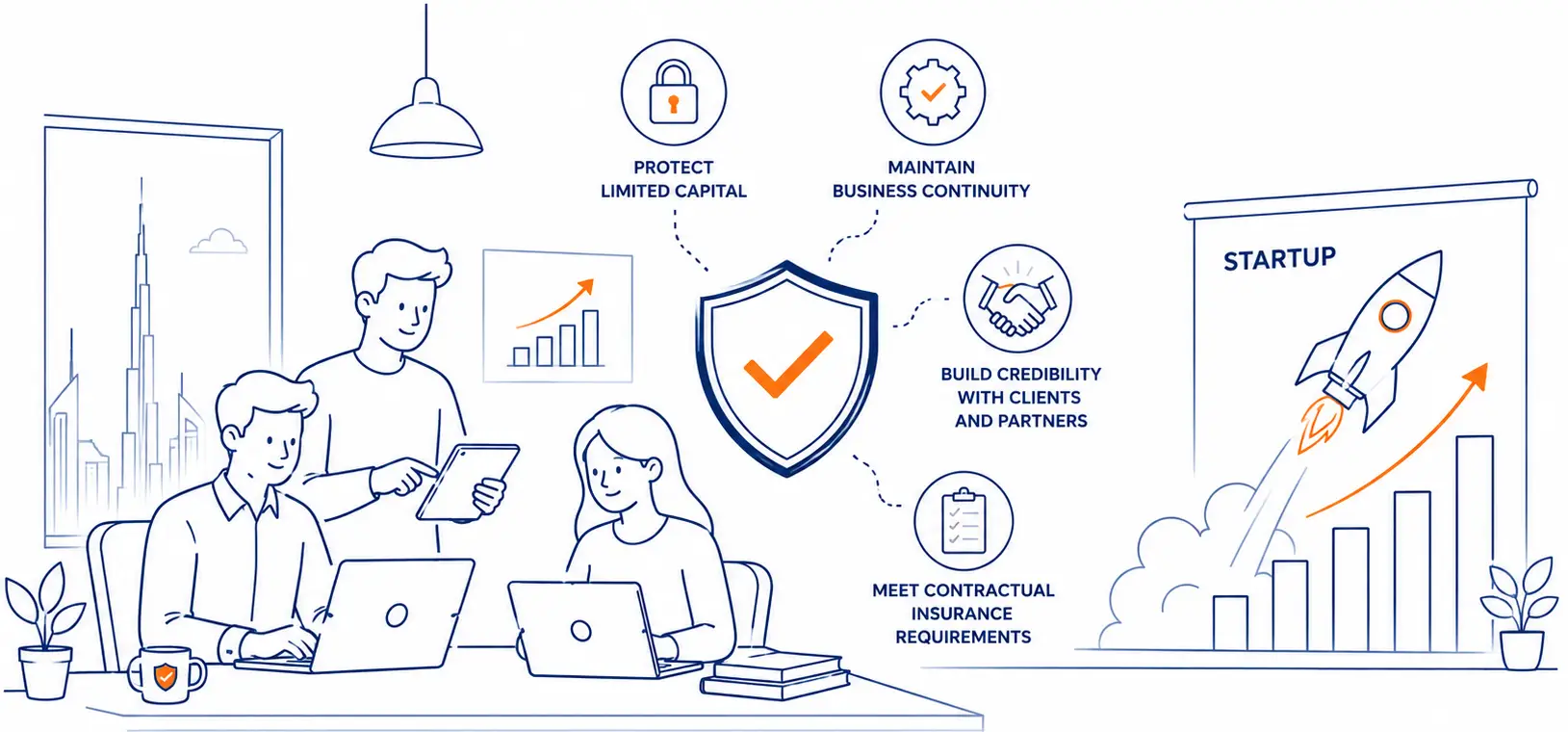
Corporate insurance helps small and growing businesses protect themselves against unexpected losses while supporting long-term stability and growth.
Corporate insurance helps SMEs and startups to:
- Protect limited capital
- Maintain business continuity
- Build credibility with clients and partners
- Meet contractual insurance requirements
Even small businesses benefit significantly from basic corporate insurance coverage.
Corporate Insurance for Free Zone Companies
Free zone businesses in Dubai often have specific insurance requirements.
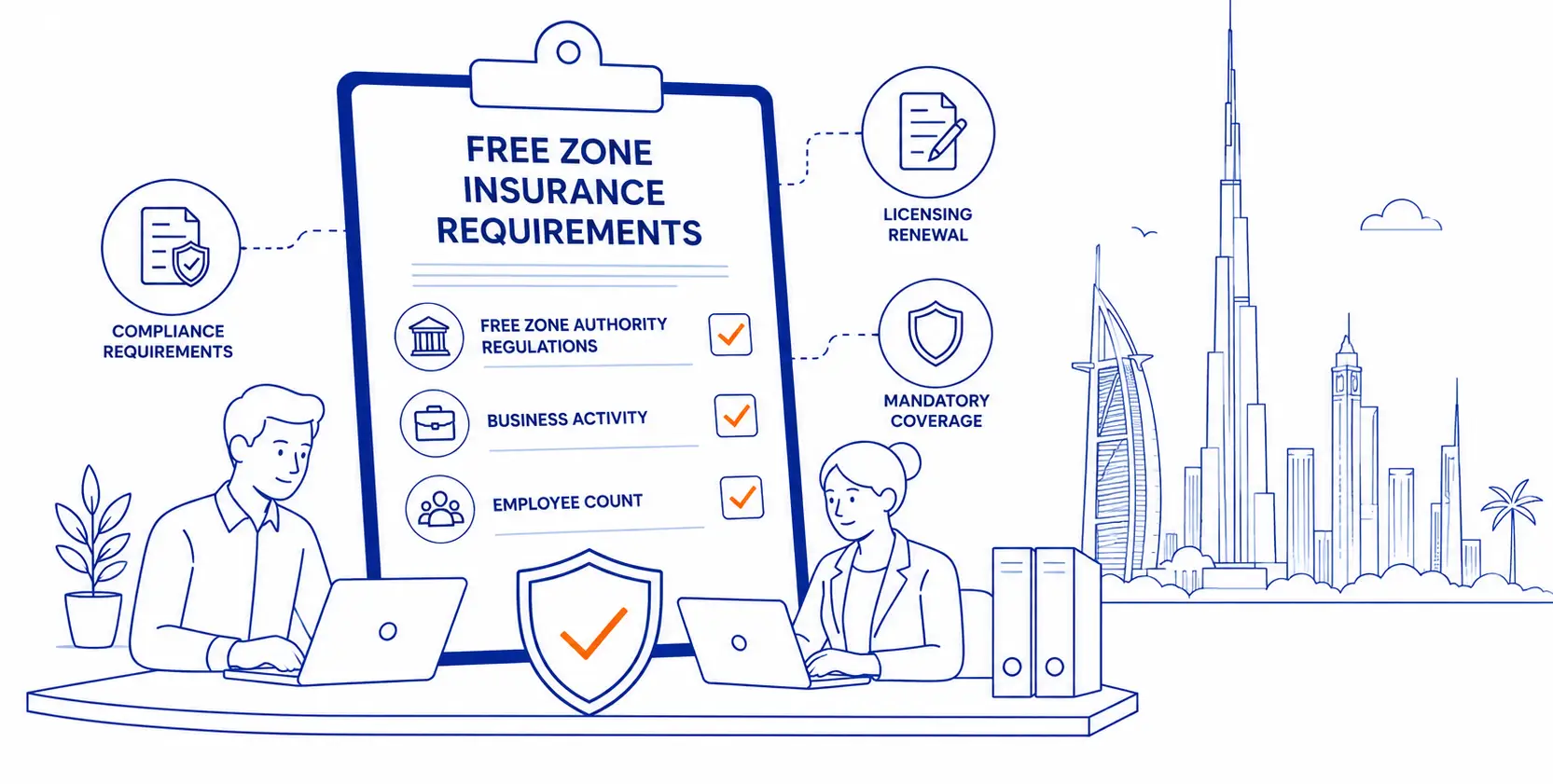
Free zone companies are subject to insurance requirements that vary based on the free zone authority, nature of business activity, and workforce size.
Insurance requirements may depend on:
- Free zone authority regulations
- Business activity
- Employee count
Certain free zones may mandate specific insurance policies for licensing and renewal.
How Corporate Insurance Premiums Are Calculated
Corporate insurance premiums depend on:
Nature of business activity
Annual turnover of the company
Number of employees
Level of risk exposure
Past claims history
Coverage limits selected
High-risk industries generally attract higher corporate insurance premiums.
How to Choose the Right Corporate Insurance in Dubai
When selecting corporate insurance, businesses should consider:
Legal & Regulatory Requirements
Ensure compliance with UAE laws, including mandatory employee health and workmen’s compensation insurance.
Nature of Business Operations
Coverage requirements vary based on industry type, business activity, and operational risk.
Employee Count & Roles
The number of employees and their job roles directly impact liability and health insurance needs.
Third-Party Risk Exposure
Businesses interacting with clients or the public should prioritise liability insurance coverage.
Assets & Contractual Obligations
Consider asset value, location, and any insurance requirements stated in contracts or client agreements.
Choosing the right mix of corporate insurance ensures full protection without unnecessary costs.
Common Mistakes Businesses Make
Corporate insurance mistakes can expose businesses to serious financial, legal, and operational risks. Being aware of these common errors helps ensure adequate and effective protection.

Buying only mandatory insurance covers

Underinsuring business assets or liabilities

Ignoring professional indemnity or cyber risks

Choosing the lowest premium without reviewing coverage

Not updating insurance as the business grows

Failing to disclose accurate business information to insurers
These mistakes can lead to significant financial losses, claim rejections, or regulatory issues if not addressed early.
Corporate Insurance Renewal & Review
Regular review of corporate insurance ensures continued protection and regulatory compliance.
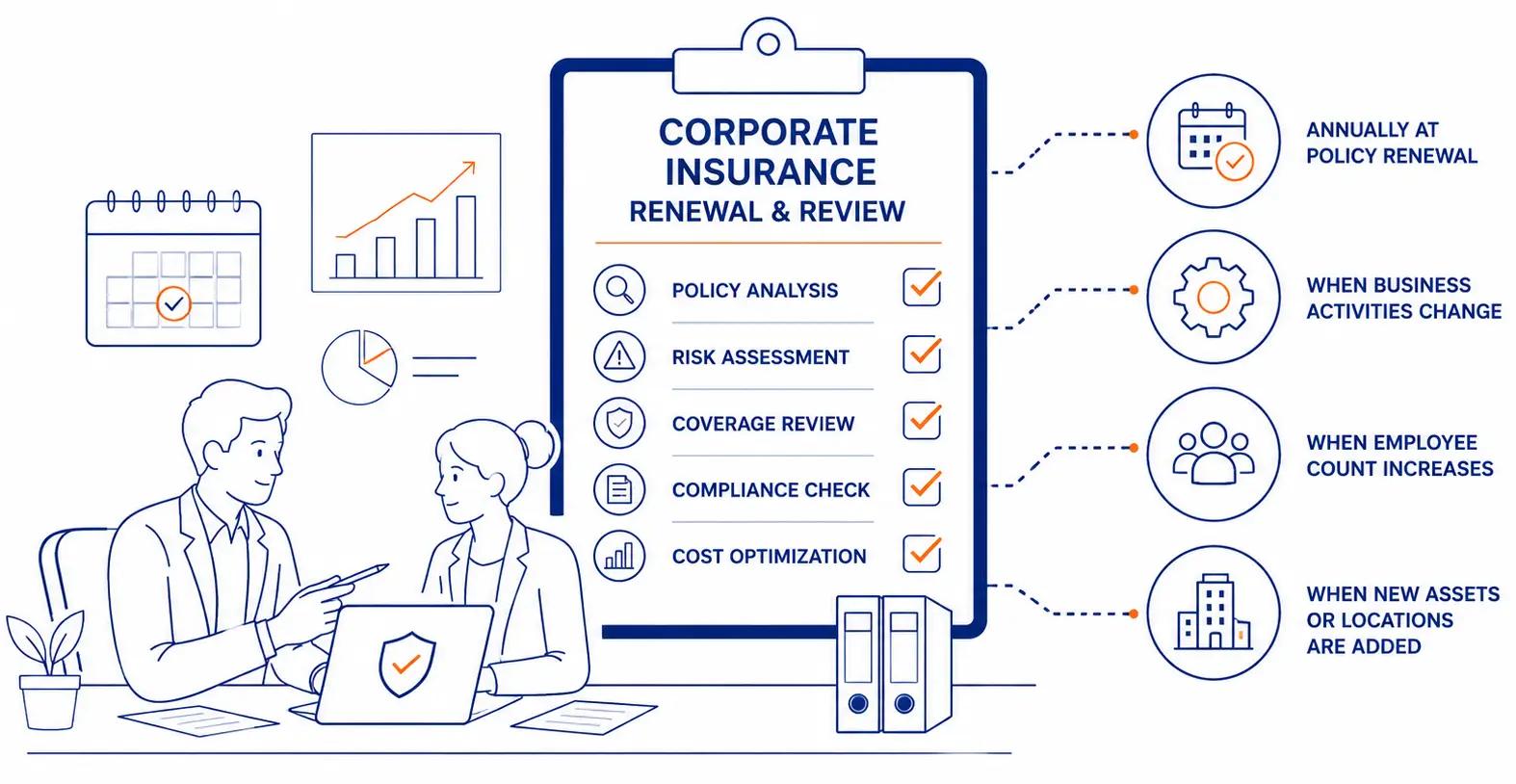
Corporate insurance policies should not be treated as static documents. As businesses evolve, insurance coverage must be reviewed to reflect operational, financial, and regulatory changes.
Corporate insurance should be reviewed:
- Annually at policy renewal
- When business activities change
- When employee count increases
- When new assets or locations are added
Regular review ensures coverage remains adequate and compliant.
Role of Insurance Brokers in Corporate Insurance
Corporate insurance can be complex due to multiple risk exposures, regulatory requirements, and policy structures. Insurance brokers help businesses navigate this complexity and secure the right coverage.
Business Risk Assessment
Brokers assess operational, financial, and liability risks specific to your business activity.
Suitable Policy Recommendations
They recommend insurance solutions aligned with business size, industry, and compliance needs.
Insurer Comparison
Brokers compare multiple insurers to secure the best coverage terms and pricing.
Policy Negotiation
They negotiate coverage limits, exclusions, and premiums on behalf of the business.
Claims Support
Brokers assist throughout the claims process to ensure fair and timely settlement.
Using a broker ensures businesses get proper coverage, not just policies.
Why Compare Corporate Insurance Policies
Corporate insurance policies vary widely in coverage structure, exclusions, and pricing. Comparing policies helps businesses make informed and cost-effective decisions.

Avoid Overpaying Premiums
Comparing insurers helps businesses avoid paying higher premiums for similar coverage.

Identify Coverage Gaps
Side-by-side comparison highlights exclusions, sub-limits, and missing protections.

Choose Reliable Insurers
Select insurers with strong financial stability and proven corporate claims records.

Align with Business Growth
Ensure insurance coverage evolves with expanding operations, assets, and workforce.
Platforms like Covermatch simplify corporate insurance comparison and advisory.
Frequently Asked Questions
What is Corporate Insurance in Dubai?
Corporate Insurance refers to insurance solutions designed to protect businesses against financial losses arising from property damage, liability claims, employee-related risks, cyber incidents, and other operational risks. Businesses can choose policies based on their industry, size, and risk profile.
Why is Corporate Insurance important for businesses in Dubai?
Corporate Insurance helps businesses manage unexpected financial risks. It can protect company assets, employees, customers, and business operations while supporting business continuity following covered losses or legal claims.
What types of Corporate Insurance are available in Dubai?
Businesses may consider Group Health Insurance, Group Life Insurance, Workmen's Compensation Insurance, Property Insurance, Business All Risk Insurance, Public Liability Insurance, Professional Indemnity Insurance, Cyber Insurance, Directors & Officers (D&O) Insurance, Marine Cargo Insurance, Motor Fleet Insurance, Contractors All Risk Insurance, Erection All Risk Insurance, Machinery Breakdown Insurance, and Fidelity Guarantee Insurance. The appropriate cover depends on the business's activities and risk exposure.
Which businesses need Corporate Insurance in Dubai?
Corporate Insurance is suitable for startups, SMEs, large corporations, manufacturers, retail businesses, hospitality companies, construction firms, logistics companies, professional service firms, healthcare providers, educational institutions, and technology companies.
Is Corporate Insurance mandatory in Dubai?
Some types of insurance may be required by law, regulators, employment requirements, lenders, landlords, or contractual agreements, depending on the nature of the business. Other insurance policies are optional but can help reduce financial risk.
How much does Corporate Insurance cost in Dubai?
Premiums depend on several factors, including industry, business activities, annual turnover, number of employees, claims history, property values, required coverage limits, and the overall risk profile of the business. Each company is assessed individually.
What information is required to get a Corporate Insurance quote?
Insurers may request your Trade Licence, company profile, business activities, number of employees, annual revenue, property values, claims history, existing insurance details, and required coverage limits. Additional information may be required depending on the policy.
Can startups buy Corporate Insurance?
Yes. Many insurers offer insurance solutions specifically designed for startups and small businesses. Policies can often be customised based on the company's size, budget, and business activities.
What is Business All Risk Insurance?
Business All Risk Insurance provides broad protection for business assets against accidental physical loss or damage from covered risks, subject to the policy wording, exclusions, and conditions.
What is Public Liability Insurance?
Public Liability Insurance protects businesses against legal liability arising from third-party bodily injury or property damage caused by business activities, subject to the policy terms.
Does Corporate Insurance cover employee-related risks?
Yes. Depending on the policies selected, businesses may obtain protection through Group Health Insurance, Group Life Insurance, and Workmen's Compensation Insurance to help manage employee-related risks.
Can businesses customise their Corporate Insurance package?
Yes. Many insurers allow businesses to combine multiple insurance policies into a customised insurance programme based on their industry, operational risks, contractual requirements, and budget.
Does Corporate Insurance cover cyber risks?
Cyber Insurance is available to help businesses manage risks associated with cyberattacks, data breaches, ransomware, and certain technology-related incidents, subject to policy terms and coverage limits.
Can Corporate Insurance cover company vehicles?
Yes. Businesses operating multiple vehicles can purchase Motor Fleet Insurance, while companies with fewer vehicles may insure them individually under commercial motor insurance policies.
What should a business do if it needs to make an insurance claim?
The business should notify its insurer promptly, take reasonable steps to reduce further loss where safe to do so, preserve evidence, and provide the required documentation. The claims process varies depending on the type of insurance.
Should SMEs have the same insurance as large corporations?
Not necessarily. Insurance requirements vary depending on business size, industry, contractual obligations, assets, workforce, and risk exposure. SMEs often need a different combination of policies than larger organisations.
Can a corporate insurance broker help my business?
Yes. A licensed insurance broker can help businesses assess their risks, compare policies from multiple insurers, explain coverage options, and assist with renewals and claims support.
How often should Corporate Insurance be reviewed?
Businesses should review their insurance annually or whenever significant changes occur, such as expanding operations, hiring additional employees, acquiring assets, opening new locations, or entering new contracts.
How can I compare Corporate Insurance in Dubai?
When comparing business insurance, consider the coverage scope, policy limits, deductibles, industry-specific extensions, claims process, financial strength of the insurer, customer service, premium, and any available risk management support.
How do I choose the right Corporate Insurance for my business?
Start by identifying your business risks, legal obligations, assets, employee requirements, and contractual commitments. Comparing multiple insurers and consulting a licensed insurance broker can help you build a corporate insurance programme that aligns with your operational needs and long-term business goals.
Why Corporate Insurance Is a Business Essential
Corporate insurance plays a critical role in protecting businesses from financial, operational, and legal risks arising from unexpected events.

Business finances

Employees

Customers

Management

Brand reputation
It ensures business continuity even during unexpected events.
Corporate Insurance Dubai
Corporate Insurance Dubai is a critical component of responsible business management. From regulatory compliance to financial protection, the right insurance safeguards your company against risks that could otherwise disrupt operations or cause major losses.
Choosing the right corporate insurance structure today ensures your business remains protected, compliant, and resilient as it grows.