
Health Insurance UAE
Health Insurance in the UAE is not just a financial safeguard—it is a legal requirement and an essential part of resident life. With rising healthcare costs and strict regulatory frameworks across emirates, having the right health insurance plan ensures uninterrupted access to quality medical care while staying compliant with UAE laws.
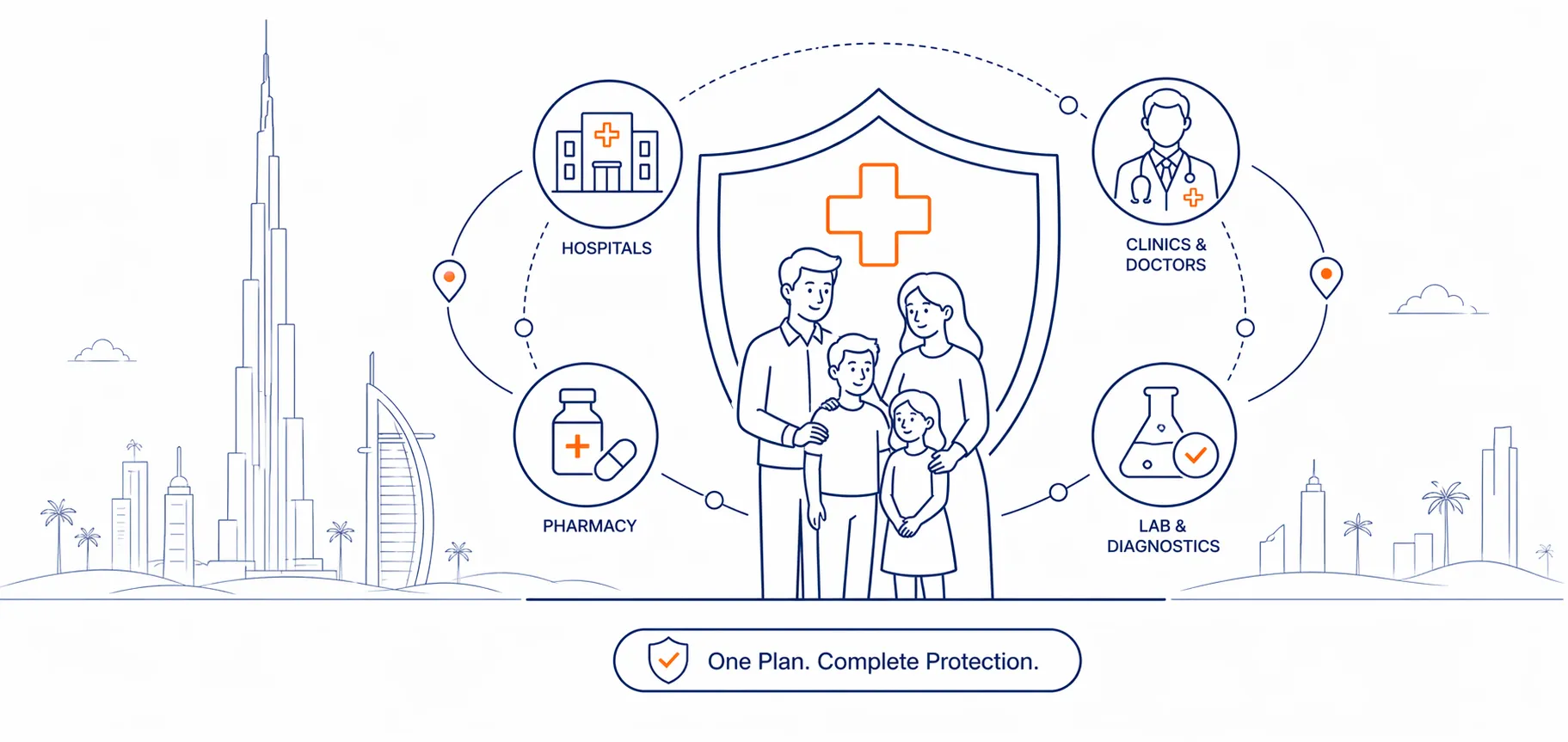
Buying health insurance for?
Partners



















Secure Medical Coverage with Confidence
Health Insurance in the UAE is not just a financial safeguard — it is a legal requirement and an essential part of resident life. With rising healthcare costs and strict regulatory frameworks across emirates, having the right health insurance plan ensures uninterrupted access to quality medical care while staying fully compliant with UAE laws.
This comprehensive guide explains Health Insurance UAE in detail — who needs it, how it works, what it covers, and how to choose the right plan based on your personal or family needs.
Why Health Insurance Is Mandatory in the UAE

The UAE government mandates health insurance to ensure all residents have access to regulated and quality healthcare services. Depending on the emirate, responsibility for providing health insurance may fall on the employer or the individual.
Health insurance is required for:
- Residence visa issuance and renewal
- Employment visa processing
- Family sponsorship visas
Without valid health insurance, residents may face:
- Visa delays or rejection
- Limited access to hospitals and clinics
- High out-of-pocket medical expenses
Who Needs Health Insurance in the UAE
Health insurance is mandatory for almost every resident category in the UAE. Coverage requirements may vary by emirate, employment type, and sponsorship status.
Private Sector Employees
Most employers are required to provide health insurance coverage as part of employment benefits.
Government Sector Employees
Covered under government-approved health insurance schemes based on emirate regulations.
Self-employed & Freelancers
Individuals must arrange and pay for their own health insurance to maintain visa validity.
Business Owners & Partners
Company owners and partners are responsible for securing personal health insurance coverage.
Sponsored Dependents
Health insurance is mandatory for spouses and children sponsored under a residence visa.
Domestic Workers
Coverage is required for domestic staff such as maids or drivers, subject to emirate rules.
Even visitors and short-term residents are encouraged to have medical coverage, as healthcare costs in private hospitals across the UAE can be significantly high.
How Health Insurance Works in the UAE
Health insurance in the UAE operates through a regulated insurer–network–provider model, ensuring residents receive cashless treatment at approved hospitals and clinics.
Buy a Policy
Purchase a health insurance policy from a licensed UAE insurer based on your visa and coverage needs.
Network Assignment
Your policy is linked to an approved healthcare network of hospitals, clinics, and pharmacies.
Cashless Treatment
Receive medical treatment at network providers without paying upfront (subject to copay terms).
Direct Claim Settlement
The insurer settles medical bills directly with the healthcare provider, reducing paperwork for you.
Most UAE health insurance plans follow annual coverage cycles with clearly defined benefits, limits, copayments, and exclusions depending on the policy type.
What Health Insurance UAE Covers & Does Not
Understanding what is included and excluded in your health insurance policy helps you avoid unexpected medical expenses and claim rejections.
What Health Insurance UAE Covers
- General practitioner consultations
- Specialist consultations
- Hospitalisation (in-patient care)
- Emergency medical treatment
- Diagnostic tests and laboratory investigations
- Prescribed medications
- Daycare procedures
Coverage limits and benefits vary depending on whether your plan is basic, mid-tier, or premium.
What Is NOT Covered Under Health Insurance
- Cosmetic procedures (unless medically required)
- Experimental or unapproved treatments
- Non-prescribed medications
- Treatment outside approved healthcare networks
- Undisclosed pre-existing medical conditions
Understanding exclusions is just as important as knowing your benefits to avoid claim delays or rejections.
Difference Between Health Insurance and Medical Insurance
Although often used interchangeably, health insurance and medical insurance serve different purposes in terms of coverage scope and benefits.
Health Insurance
- Focuses on overall healthcare protection
- Includes preventive care and routine checkups
- Designed to meet UAE regulatory and visa compliance
- Covers both outpatient and inpatient services
Medical Insurance
- Focused mainly on hospitalisation and treatments
- Covers surgeries, procedures, and inpatient care
- More treatment-centric than preventive
- Often chosen for hospital-focused coverage
👉 For hospital-centric plans and treatment-focused coverage, refer to Medical Insurance UAE.
Health Insurance Plans Available in the UAE
Health insurance plans in the UAE are designed to meet different residency requirements, family needs, and budget levels.
Individual Health Insurance
Designed for single residents and professionals seeking personal medical coverage with flexible benefits.
Family Health Insurance
Covers spouses and children under a single policy, offering cost-effective and comprehensive family protection.
Employer-Provided Group Medical Insurance
Provided by employers to employees as part of UAE labour and visa compliance requirements.
Essential Benefits Plan (EBP)
A government-regulated, low-cost plan designed for low-income workers, meeting mandatory coverage requirements.
Enhanced Health Insurance Plans
Mid-tier plans offering wider hospital networks, higher limits, and additional outpatient benefits.
Premium Medical Insurance Plans
High-end plans with international coverage, private hospitals, maternity, and advanced medical benefits.
Each plan type serves a different demographic and budget requirement.
Healthcare Networks in the UAE
Health insurance plans in the UAE are linked to specific healthcare provider networks, which determine where you can receive medical treatment.

Hospitals & Clinics
Defines the hospitals, medical centres, and clinics where treatment is covered under your policy.

Pharmacy Access
Determines which pharmacies you can use to obtain prescribed medications on a cashless basis.

Specialist Availability
Controls access to specialists such as cardiologists, orthopaedics, dermatologists, and surgeons.

Geographic Coverage
Specifies whether coverage applies within one emirate, across the UAE, or includes wider regions.
Choosing the right network is critical, especially for families and individuals with ongoing medical needs.
How to Choose the Right Health Insurance Plan
When selecting health insurance in the UAE, consider the following factors:
Coverage Needs
- • Individual vs family coverage
- • Frequency of doctor visits
- • Existing or chronic conditions
Medical Network
- • Proximity of hospitals
- • Availability of specialists
- • Preferred clinics or doctors
Budget & Limits
- • Annual coverage limit
- • Co-payment percentages
- • Medication and treatment caps
Waiting Periods
- • Pre-existing conditions
- • Maternity and special benefits
Health Insurance for Employees vs Individuals
While many residents receive health insurance through employment, individual plans offer greater flexibility and control over coverage.
Employer-Provided Health Insurance
- Provided by the employer as part of employment benefits
- Often meets only the minimum regulatory requirements
- Limited hospital and clinic network
- Coverage depends on employer’s selected plan
Individual Health Insurance
- Purchased independently by the individual
- Customised coverage based on personal or family needs
- Access to wider hospital and specialist networks
- Higher flexibility in limits, add-ons, and benefits
Many UAE residents choose to upgrade or supplement their employer-provided insurance with individual health plans to gain better coverage and network access.
Pre-existing Conditions in Health Insurance

UAE regulations allow coverage for pre-existing conditions, subject to:
- Full medical disclosure
- Defined waiting periods
- Policy-specific approvals
Important: Non-disclosure or incorrect disclosure of pre-existing conditions can result in claim rejection or policy cancellation.
👉 Detailed guidance is available on Pre-existing Conditions UAE.
Maternity Benefits and Health Insurance

Maternity benefits are either included or offered as add-ons, depending on the plan. Coverage may include:
- Antenatal consultations
- Delivery (normal or caesarean)
- Post-natal care
Note: Maternity benefits often come with waiting periods and sub-limits. Coverage availability varies by insurer and plan tier.
👉 Read more on Maternity Cover UAE.
Essential Benefits Plan (EBP)

The EBP is a government-approved, low-cost health insurance option designed for specific salary brackets. It provides:
- Basic hospitalisation
- Emergency treatment
- Limited network access
Important: Eligibility for EBP depends on salary criteria and emirate-specific regulations. Coverage is basic and may not include advanced treatments or premium hospitals.
👉 Learn more on Essential Benefits Plan (EBP).
Common Mistakes to Avoid When Buying Health Insurance

Choosing the cheapest plan without understanding coverage
Not fully disclosing medical history or pre-existing conditions
Not checking sub-limits on room rent, medicines, or benefits
Ignoring network restrictions
Overlooking waiting periods
Delaying policy renewal
Avoiding these mistakes helps ensure smoother claims, wider hospital access, and long-term financial protection for you and your family.
Renewing Health Insurance in the UAE

Renew health insurance to ensure uninterrupted coverage, protecting you from major out-of-pocket medical costs, especially as you age and health risks increase.
Health insurance must remain active at all times. Renewal is required:
- Before visa renewal
- Before policy expiry
Renewing early helps:
- Maintain continuous coverage
- Avoid waiting periods restarting
- Retain benefits
Frequently Asked Questions
What is health insurance in the UAE?
Health insurance helps cover the cost of medical treatment, including doctor consultations, hospitalisation, diagnostic tests, prescribed medicines, and other healthcare services covered under your policy. The benefits depend on the insurer, plan, and policy terms.
Is health insurance mandatory in the UAE?
Health insurance requirements vary across the UAE. Residents should ensure they have health insurance that complies with the regulations applicable in the emirate where they live or work.
Who can buy health insurance in the UAE?
Health insurance is available for UAE Nationals, UAE residents, expatriates, families, children, senior citizens, self-employed individuals, and business owners. Eligibility depends on the insurer and the chosen plan.
What does health insurance cover in the UAE?
Depending on your plan, health insurance may cover doctor consultations, hospitalisation, emergency treatment, diagnostic tests, prescription medicines, surgery, maternity benefits, chronic disease management, and preventive healthcare. Coverage varies by insurer and policy.
How much does health insurance cost in the UAE?
The premium depends on several factors, including age, medical history, emirate of residence, coverage level, hospital network, optional benefits, and existing medical conditions. Comparing multiple plans can help you find suitable coverage within your budget.
Can expatriates buy health insurance in the UAE?
Yes. Expatriates living in the UAE can purchase individual, family, or corporate health insurance plans, subject to the insurer's eligibility requirements.
Does health insurance cover pre-existing medical conditions?
Coverage for pre-existing medical conditions depends on the insurer, the selected policy, and applicable regulations. Some plans may include waiting periods or underwriting conditions before certain treatments become covered.
Can I add my spouse and children to my health insurance policy?
Yes. Many insurers offer family health insurance plans that allow you to insure your spouse and dependent children under one policy, subject to the insurer's eligibility rules.
What is a hospital network in health insurance?
A hospital network is a list of hospitals, clinics, pharmacies, and healthcare providers where you can receive treatment using your health insurance. Choosing a network hospital often allows eligible treatments to be provided on a cashless basis, subject to policy terms.
What documents are required to buy health insurance in the UAE?
The required documents may include Emirates ID, Passport, UAE residence visa, Date of birth, Medical declaration (if applicable), and previous insurance details for renewals. Requirements vary between insurers.
Does health insurance cover maternity?
Many health insurance plans include maternity benefits, but coverage limits, waiting periods, and eligibility vary between policies. Always review the maternity benefits before purchasing a plan.
Can I renew my health insurance every year?
Yes. Most health insurance policies are issued for one year and can be renewed annually, subject to the insurer's renewal terms and regulatory requirements.
How do I make a health insurance claim?
For network providers, eligible treatments are usually provided through a cashless process by presenting your health insurance card. For reimbursement claims, you may need to submit medical bills, prescriptions, receipts, and claim forms to the insurer.
Can I buy health insurance online in the UAE?
Yes. You can compare health insurance plans, request quotes, and purchase many policies online, making it easier to find coverage that matches your healthcare needs and budget.
How can I compare health insurance plans in the UAE?
When comparing health insurance plans, consider coverage benefits, hospital and clinic network, annual coverage limits, co-payments, deductibles, maternity benefits, pre-existing condition coverage, claims process, and premium cost. Comparing multiple insurers helps you choose a health insurance plan that suits your medical needs and financial goals.
Why Compare Health Insurance Before Buying
Comparing health insurance plans helps you:

Benefits Comparison
Understand benefit differences.

Network Adequacy
Choose the right network

Premium Costs
Avoid overpaying premium costs

Coverage Needs
Match coverage with actual needs
This is where platforms like Covermatch help simplify decision-making.
Health Insurance UAE
Health Insurance UAE is essential for legal compliance, financial protection, and access to quality healthcare. With multiple plan types, networks, and coverage levels available, choosing the right policy requires clarity and informed comparison.
A well-chosen health insurance plan ensures peace of mind—today and in the future.