
Health Insurance Dubai
Health Insurance in Dubai is mandatory for all residents, playing a critical role in visa processing, employment compliance, and access to quality healthcare. With Dubai being home to some of the most advanced private hospitals in the region, having the right health insurance ensures you can access treatment without financial strain.
Buying health insurance for?
Partners













Compliant, Reliable Medical Cover for Everyday Life
Health Insurance in Dubai is mandatory for all residents, playing a critical role in visa processing, employment compliance, and access to quality healthcare. With Dubai being home to some of the most advanced private hospitals in the region, having the right health insurance ensures you can access treatment without financial strain.
This guide explains Health Insurance Dubai in detail—who must be covered, how Dubai’s health insurance system works, what is covered, and how to choose the right plan based on your needs.
Is Health Insurance Mandatory in Dubai?
Yes. Health insurance is compulsory in Dubai under emirate-level regulations.

Valid health insurance is a legal requirement for residents in Dubai and is closely linked to visa processing, employment compliance, and access to healthcare services.
Health insurance is required for:
- Residence visa issuance and renewal
- Employment visa processing
- Sponsoring dependents
Without valid health insurance, residents may face visa delays, fines, or limited access to healthcare services.
Who Is Responsible for Health Insurance in Dubai

In Dubai, the responsibility for arranging health insurance depends on a person’s residency and employment status.
Responsibility for providing health insurance in Dubai depends on residency status:
- Employers are responsible for insuring employees
- Individuals are responsible for dependents (spouse & children)
- Freelancers and investors must arrange their own coverage
Ensuring continuous coverage is essential for legal compliance.
How Health Insurance Works in Dubai
Health insurance in Dubai operates through a regulated system involving:
Licensed Health Insurers
Health insurance policies must be issued by insurers licensed and regulated to operate in Dubai.
Approved Healthcare Networks
Each policy is linked to an approved medical network that defines accessible hospitals, clinics, and pharmacies.
DHA-Registered Providers
Treatment is provided at hospitals and clinics registered with the Dubai Health Authority (DHA).
Most treatments are provided on a cashless basis at network providers, with direct settlement between insurer and hospital.
What Does Health Insurance Dubai Cover?
Coverage varies by plan, but most Dubai-compliant health insurance policies include essential outpatient, inpatient, and emergency medical benefits.
Out-Patient Services
- ✓GP consultations
- ✓Specialist visits
- ✓Diagnostic tests
- ✓Prescribed medicines
In-Patient Services
- ✓Hospitalisation
- ✓Surgical procedures
- ✓ICU and emergency care
- ✓Daycare surgeries
Emergency Treatment
- ✓Accident-related care
- ✓Emergency room services
- ✓Ambulance services (as per policy terms)
Coverage details, limits, and sub-limits vary by insurer and plan tier. Always review policy terms carefully before purchase.
What Is Not Covered
Common exclusions include:

Cosmetic or elective procedures

Experimental treatments

Non-prescribed medication

Treatment outside approved networks

Alternative therapies not approved by the insurer

Self-inflicted injuries or non-medical treatments
• Undisclosed medical conditions Understanding exclusions helps prevent claim issues later.
Types of Health Insurance Plans in Dubai
Health insurance plans available in Dubai include:

Individual Health Insurance
Standalone plans designed for single residents seeking flexible and customisable medical coverage.

Family Health Insurance
One policy covering spouse and children, offering cost-effective and simplified healthcare management.

Employer-Provided Insurance
Group health insurance arranged by employers to meet Dubai’s mandatory coverage requirements.

Essential Benefits Plan (EBP)
Government-approved basic health insurance for eligible low-income residents and workers.

Enhanced & Premium Plans
High-end plans offering wider hospital access, international coverage, and enhanced benefits.
Each plan type serves a different income group and healthcare need.
Essential Benefits Plan (EBP) in Dubai
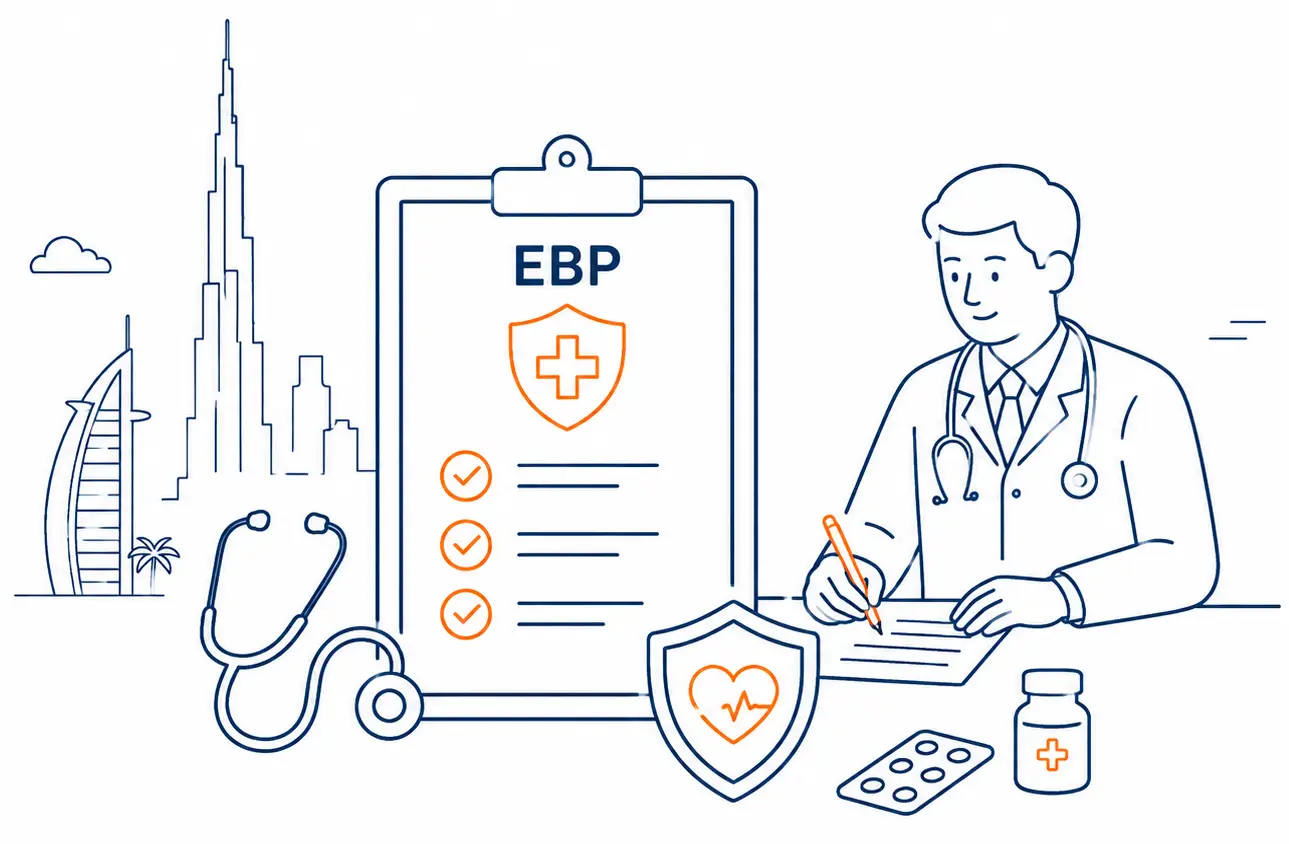
Dubai introduced the Essential Benefits Plan (EBP) to provide affordable health insurance for eligible residents.
The Essential Benefits Plan offers:
- Basic medical coverage
- Limited hospital network
- Regulated premium levels
EBP is designed for legal compliance and essential healthcare needs, rather than comprehensive or premium medical coverage.
👉 For details, refer to Essential Benefits Plan (EBP).
Medical Networks in Dubai
Health insurance plans in Dubai are linked to provider networks that define:

Hospitals & Clinics
Defines which hospitals and clinics you can visit for consultations and treatment.

Specialist Access
Determines availability of specialists such as cardiologists, orthopaedics, and gynaecologists.

Pharmacy Coverage
Specifies approved pharmacies where prescribed medicines can be obtained.

Location Convenience
Choosing a network close to your residence or workplace ensures easier access to care.
Choosing a network close to your residence or workplace is crucial for convenience.
Health Insurance for Families in Dubai
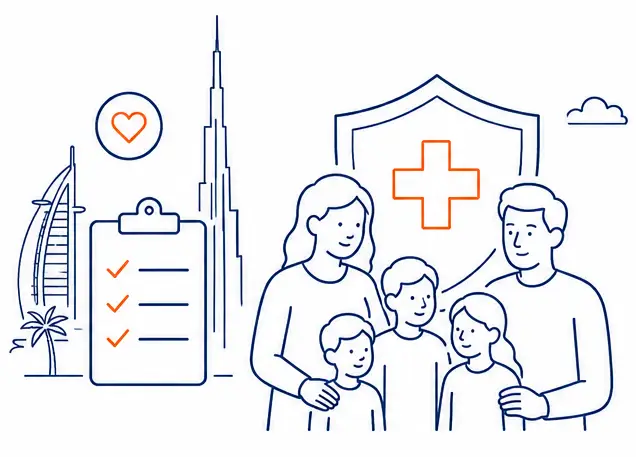
Family members sponsored in Dubai must have valid health insurance.
Family health insurance plans offer:
- Unified coverage for spouse and children
- Simplified renewals
- Cost efficiency compared to individual policies
Family plans are especially useful for sponsors managing multiple dependents, ensuring continuous coverage while keeping healthcare administration simple.
👉 Learn more under Family Health Insurance UAE.
Health Insurance for Individuals & Freelancers in Dubai

Self-employed residents, freelancers, and investors in Dubai must arrange their own health insurance.
Individual health insurance plans offer:
- Customised coverage
- Flexible networks
- Control over benefits and premiums
These plans are ideal for residents seeking independence from employer-provided insurance and long-term control over healthcare access in Dubai.
👉 Read more under Individual Health Insurance UAE.
Pre-existing Conditions in Dubai Health Insurance
Pre-existing medical conditions are covered in Dubai.
Subject to:
- Mandatory disclosure
- Waiting periods
- Policy-specific terms
Failure to disclose pre-existing conditions may result in claim rejection or cancellation of the health insurance policy.
👉 Detailed rules are explained under Pre-existing Conditions UAE.
Maternity Benefits in Dubai Health Insurance
In Dubai, maternity benefits are not uniformly included across all health insurance plans.
Maternity benefits may be:
- Included in employer plans
- Offered as add-ons in individual or family plans
Coverage includes antenatal care, delivery, and post-natal services, subject to limits.
👉 Refer to Maternity Cover UAE for details.
How to Choose the Right Health Insurance Plan in Dubai
When selecting a Dubai health insurance plan, consider:
Hospital Network Proximity
Ensure hospitals and clinics in the network are close to your residence or workplace for easy access.
Coverage Limits & Sub-limits
Review annual limits and treatment-specific caps to avoid unexpected medical expenses.
Co-payment Structure
Understand how much you pay per consultation, test, or hospital visit under the policy.
Waiting Periods
Check waiting periods for pre-existing conditions, maternity benefits, and specific treatments.
Family & Maternity Needs
Consider whether you need dependent coverage, maternity benefits, or future family planning support.
Choosing the right plan ensures compliance and quality healthcare access.
Renewal of Health Insurance in Dubai
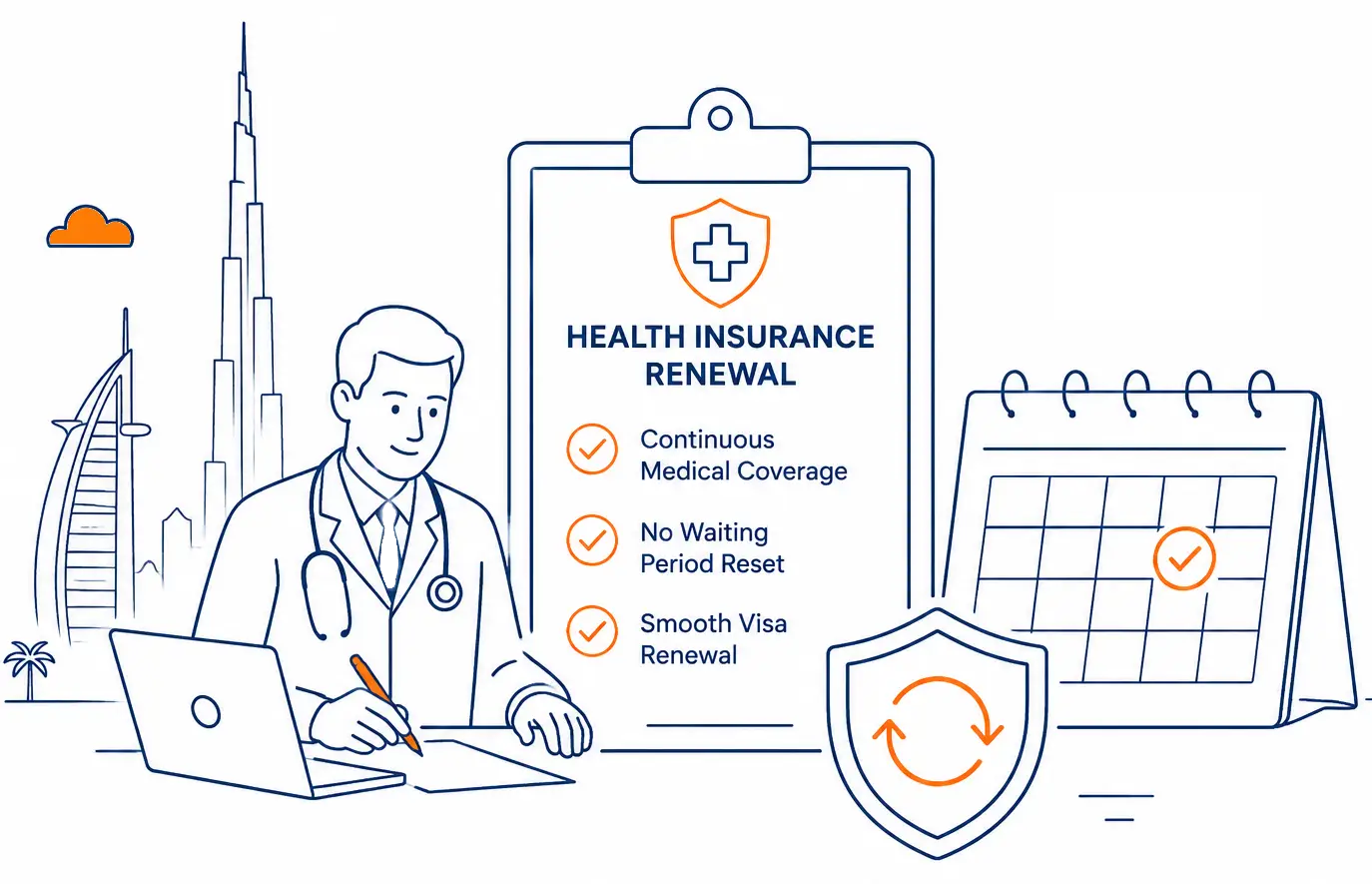
Health insurance policies must be renewed annually in Dubai.
Timely renewal ensures:
- ✓Continuous medical coverage
- ✓No waiting period reset
- ✓Smooth visa renewal
Delays can impact visa processing.
Common Mistakes to Avoid
Many issues related to claims and visa compliance arise due to avoidable mistakes when selecting or managing health insurance in Dubai.

Choosing the cheapest plan without checking network

Ignoring co-payments and limits

Not disclosing medical history

Letting policies lapse before renewal
Avoiding these mistakes prevents claim and visa issues.
Frequently Asked Questions
What is Health Insurance in Dubai?
Health Insurance in Dubai helps cover eligible medical expenses such as doctor consultations, hospitalisation, surgery, emergency treatment, diagnostic tests, and prescribed medicines, subject to your policy's terms and conditions.
Is Health Insurance mandatory in Dubai?
Yes. Dubai has mandatory health insurance requirements for residents. Individuals should ensure they have a valid health insurance policy that complies with applicable regulations.
Who can buy Health Insurance in Dubai?
Health Insurance is available for UAE Nationals, Dubai residents, expatriates, families, children, senior citizens, self-employed individuals, and business owners. Eligibility depends on the insurer and the selected plan.
What does Health Insurance in Dubai cover?
Coverage depends on the policy but may include GP consultations, specialist consultations, hospitalisation, emergency treatment, surgery, diagnostic tests, prescription medicines, preventive healthcare, and maternity benefits (where included).
How much does Health Insurance cost in Dubai?
The premium depends on age, medical history, coverage level, hospital network, pre-existing medical conditions, and optional benefits. Comparing different insurers helps you find suitable cover for your healthcare needs.
Can expatriates buy Health Insurance in Dubai?
Yes. Expatriates living in Dubai can purchase individual, family, or corporate health insurance plans through licensed insurers.
Does Health Insurance cover pre-existing medical conditions?
Coverage depends on the insurer, selected plan, and applicable regulations. Some plans may include waiting periods or underwriting requirements before certain treatments become covered.
Can I include my spouse and children?
Yes. Many insurers offer family health insurance plans that allow spouses and dependent children to be covered under one policy.
What is a hospital network?
A hospital network is a list of approved hospitals, clinics, pharmacies, and healthcare providers where you can receive eligible treatment using your health insurance.
What documents are required to buy Health Insurance?
Typically, you'll need an Emirates ID, Passport, Residence visa, Date of birth, Medical declaration (if required), and previous insurance details (for renewals).
Does Health Insurance include maternity cover?
Many plans include maternity benefits. Coverage limits, waiting periods, and eligibility vary depending on the insurer and policy.
Can I renew my Health Insurance every year?
Yes. Most health insurance policies are issued annually and can be renewed before expiry, subject to the insurer's renewal terms.
How do Health Insurance claims work?
For network hospitals, eligible treatment is generally provided on a cashless basis. For reimbursement claims, you submit medical invoices, receipts, prescriptions, and claim forms for assessment.
Can I buy Health Insurance online in Dubai?
Yes. Many insurers and insurance comparison websites allow you to compare plans, receive quotations, and purchase Health Insurance online.
How can I compare Health Insurance plans in Dubai?
Compare plans based on coverage benefits, hospital network, annual coverage limits, co-payments, deductibles, maternity benefits, coverage for chronic conditions, premium, claims support, and customer service.
Why Compare Health Insurance in Dubai
Comparing health insurance plans helps you:

Benefit Comparison
Understand differences in coverage, limits, and included medical benefits.

Hospital Networks
Choose the right hospital and clinic network based on convenience and quality.

Cost Control
Manage premiums, co-payments, and out-of-pocket healthcare expenses effectively.

Regulatory Compliance
Ensure your plan meets Dubai’s mandatory health insurance requirements.
Platforms like Covermatch make it easier to compare plans transparently and choose what fits best.
Health Insurance Dubai
Health Insurance Dubai is essential for legal compliance, financial protection, and access to quality healthcare. With multiple plan options and networks available, selecting the right health insurance ensures peace of mind and uninterrupted medical care.
Choosing the right Dubai health insurance plan today protects your health and your residency tomorrow.