
Schengen Visa Insurance
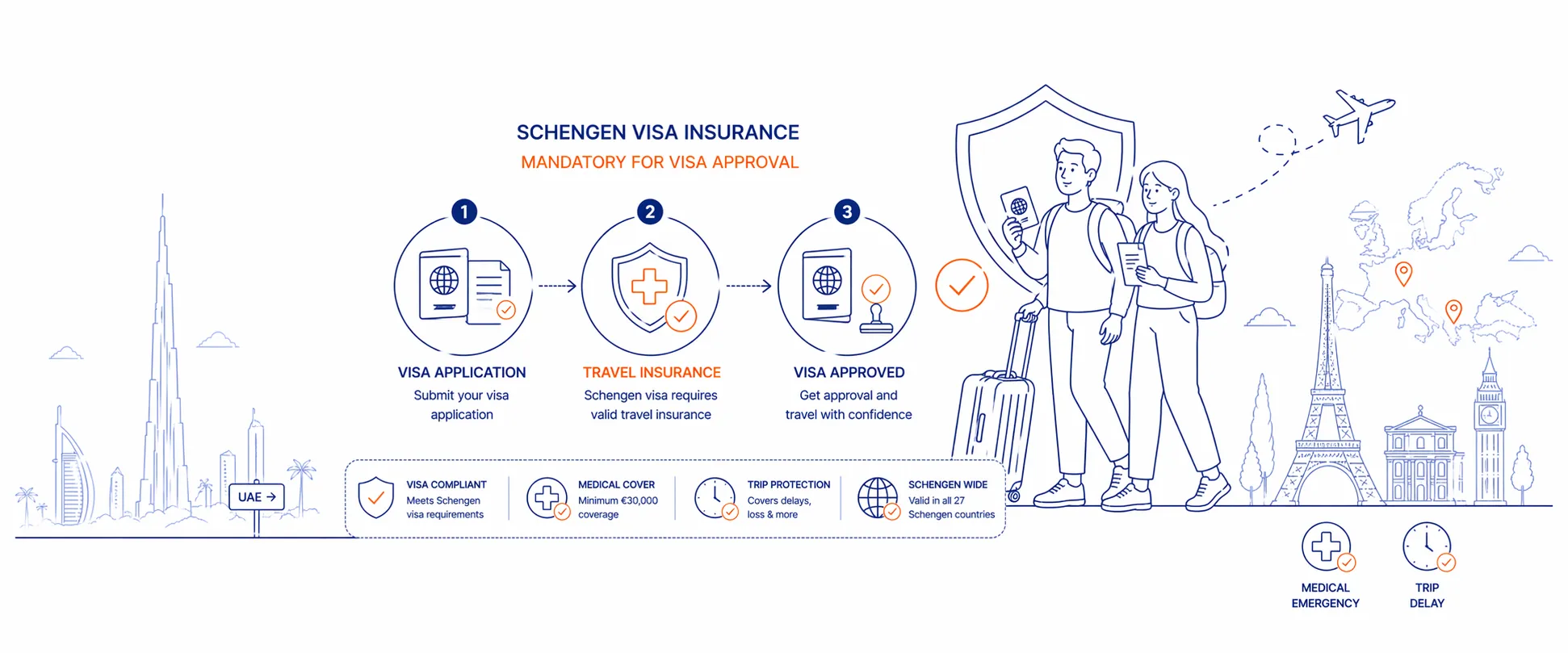
Schengen Visa Insurance is mandatory for anyone applying for a Schengen visa from the UAE. Without valid, compliant travel insurance, your visa application can be rejected, even if all other documents are in order.
Going abroad? Protect your trip with travel insurance?
Partners

















Embassy-Approved Medical Coverage for Europe Travel
Schengen Visa Insurance is mandatory for anyone applying for a Schengen visa from the UAE. Without valid, compliant travel insurance, your visa application can be rejected—even if all other documents are complete and correct.
This guide explains Schengen Visa Insurance UAE in detail, including coverage requirements, validity rules, common rejection reasons, costs, and how to choose an embassy-approved policy that fully complies with Schengen regulations.
What Is Schengen Visa Insurance?
Schengen Visa Insurance is a specialised travel insurance policy designed to meet the minimum medical insurance requirements set by Schengen member countries.
It ensures that travellers visiting Europe have financial protection for:
- Medical emergencies
- Hospitalisation
- Emergency medical evacuation
- Repatriation
The insurance must be valid before the visa is issued and throughout the entire travel period.
Is Schengen Visa Insurance Mandatory from the UAE?
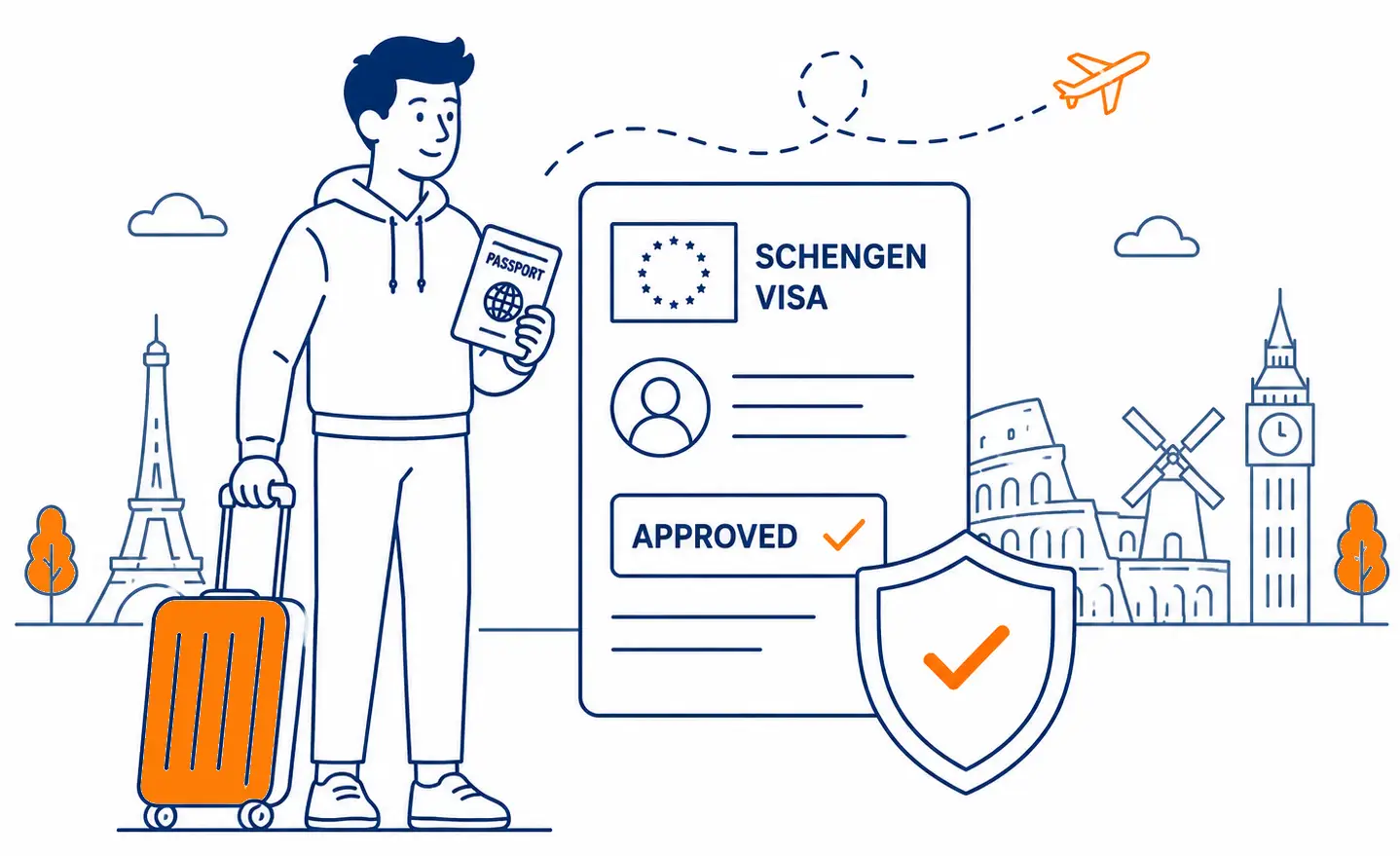
Yes. Schengen Visa Insurance is compulsory for all Schengen visa applicants, including UAE residents and expatriates applying through European embassies or authorised visa centres.
Without compliant Schengen visa insurance:
- Your visa application will not be accepted
- Embassies may reject incomplete submissions
- Visa processing can be delayed or denied
Schengen-compliant insurance must meet minimum coverage, validity, and territorial requirements defined by Schengen regulations.
Who Needs Schengen Visa Insurance UAE
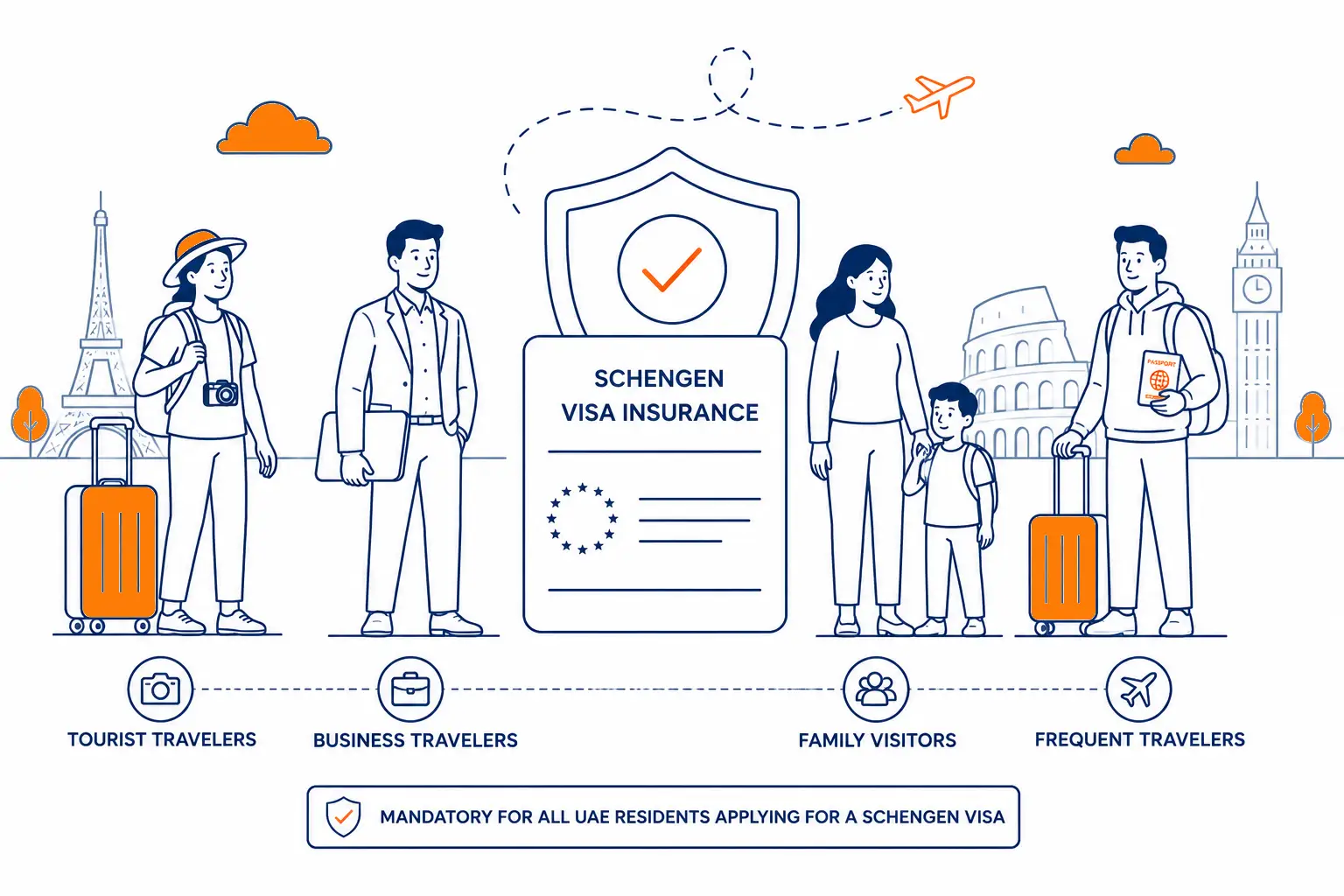
Schengen visa insurance is mandatory for all UAE residents applying for a Schengen visa, regardless of travel purpose or frequency.
Schengen visa insurance is required for:
- UAE residents applying for tourist Schengen visas
- Business travellers visiting Europe
- Family visitors
- Short-term travellers to Schengen regions
- First-time and repeat Schengen applicants
Both single-entry and multiple-entry visa applicants must provide valid insurance.
Schengen Visa Insurance Requirements
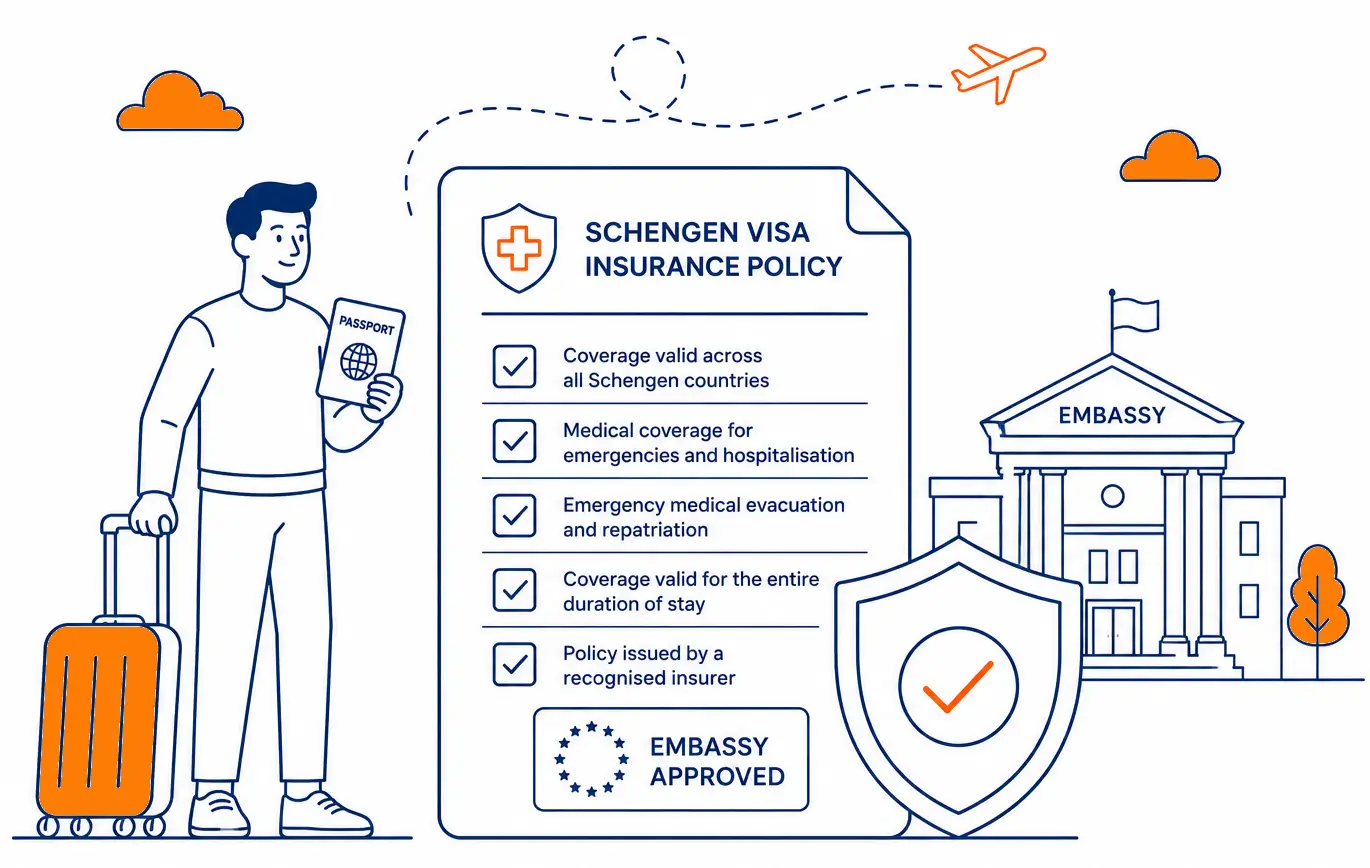
To be accepted by embassies, Schengen visa insurance must meet all of the following conditions.
Your Schengen visa insurance must include:
- Coverage valid across all Schengen countries
- Medical coverage for emergencies and hospitalisation
- Emergency medical evacuation and repatriation
- Coverage valid for the entire duration of stay
- Policy issued by a recognised insurer
Important: Failure to meet even one requirement can result in visa rejection.
Countries Covered Under Schengen Insurance
Schengen visa insurance must cover all Schengen member states, including but not limited to:

France

Germany

Italy

Spain

Netherlands

Switzerland

Austria

Belgium

Sweden
Coverage must be valid even if you visit multiple countries during the same trip.
What Does Schengen Visa Insurance Cover
& What Is NOT Covered?
Embassy-approved Schengen travel insurance must meet specific medical coverage requirements.
What Does Schengen Visa Insurance Cover?
- Emergency medical treatment due to illness or accident
- Doctor consultations and hospital admission
- In-patient treatment, surgical procedures and Emergency medical care
- Evacuation to the nearest suitable facility or home country if required
- Repatriation of remains in case of death

Embassy-compliant medical coverage
Required for Schengen visa approval
What Is NOT Covered Under Schengen Insurance
- Pre-existing medical conditions (unless explicitly specified)
- Non-emergency or planned medical treatments
- Cosmetic or elective medical procedures
- High-risk adventure activities
- Treatment related to alcohol or substance abuse

Avoid visa rejection
Review exclusions before applying
Single-Entry vs Multiple-Entry Schengen Insurance
Understanding the difference helps ensure visa compliance and smooth travel approval.
Single-Entry Schengen Insurance
- Covers one specific trip
- Valid only for the stated travel dates
- Suitable for short, one-time visits
Multiple-Entry Schengen Insurance
- Required for frequent travellers
- Coverage must span a longer period
- Each trip duration must be within visa rules
Choosing the wrong type can affect visa approval.
Validity Rules for Schengen Visa Insurance
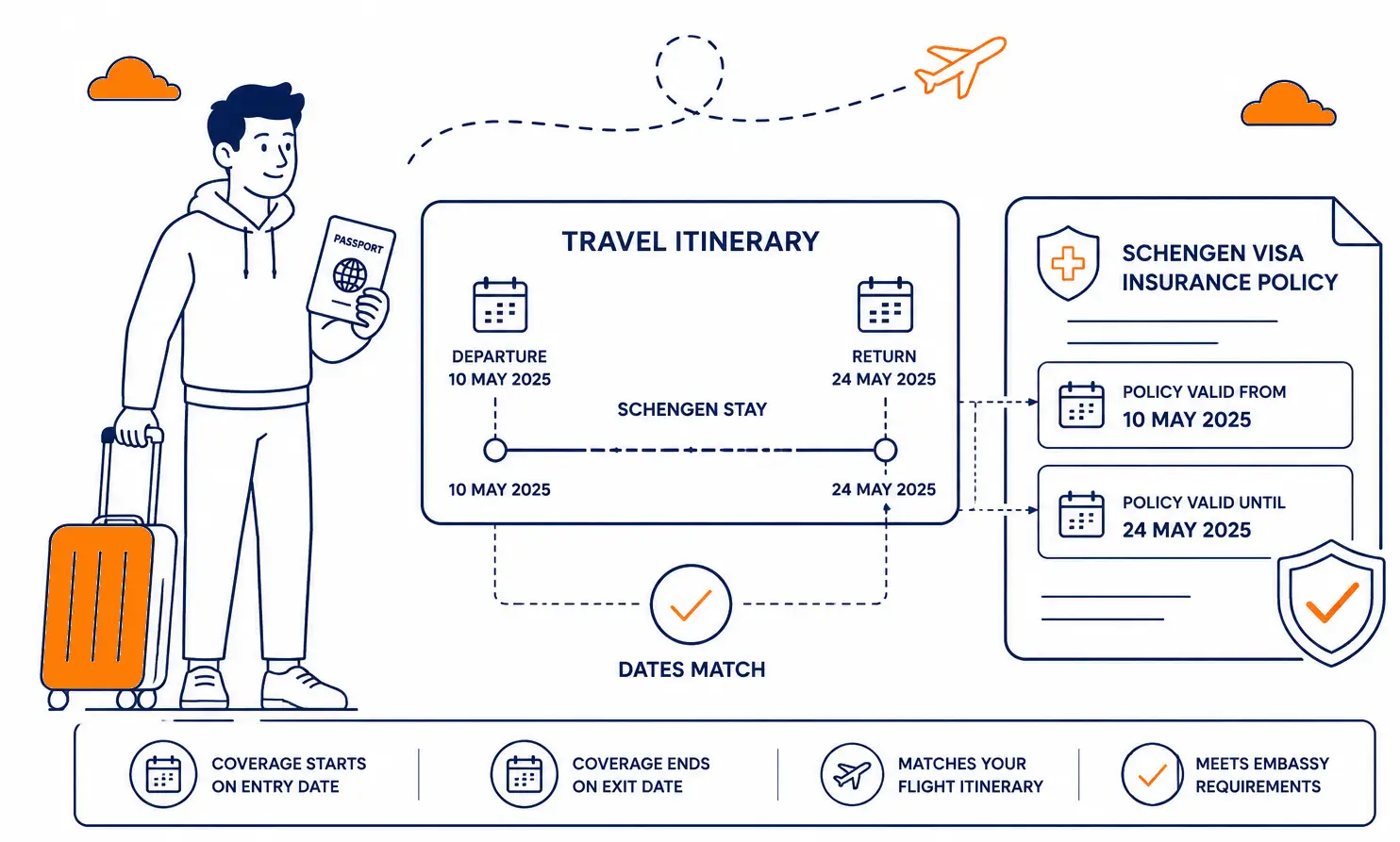
Schengen visa insurance must strictly align with your travel itinerary. Any mismatch in dates can lead to visa delays or rejection.
Schengen insurance must:
- Start from the date of entry into the Schengen area
- End on the date of exit from Schengen countries
- Match the flight itinerary exactly
Tip: Many embassies recommend adding buffer days before entry and after exit to avoid issues caused by flight changes or delays.
Common Reasons Schengen Visas Get Rejected Due to Insurance
Many visa rejections happen because of insurance errors, such as:

Insurance valid for only one country

Coverage dates shorter than travel dates

Missing evacuation or repatriation cover

Insurance policy not clearly mentioning Schengen coverage

Policy issued by unrecognised providers

Policy issued by non-embassy-approved providers
Choosing embassy-approved insurance avoids these problems.
How Much Does Schengen Visa Insurance Cost in the UAE?
The cost of Schengen visa insurance depends on:
Trip Duration
Longer travel periods generally result in higher premiums compared to short trips.
Traveller’s Age
Premiums may increase for senior travellers due to higher medical risk.
Single or Multiple Entry
Multiple-entry policies cost more as they provide extended validity.
Coverage Period
Insurance must cover the full travel duration, including any buffer days.
Short trips generally have very affordable premiums, making Schengen insurance one of the lowest-cost but highest-impact visa documents.
Schengen Visa Insurance vs Regular Travel Insurance
While Schengen insurance is a type of travel insurance, not all travel insurance policies meet Schengen requirements.
Schengen Visa Insurance
- ✓Embassy-specific and mandatory for visa approval
- ✓Covers all Schengen countries
- ✓Includes emergency medical treatment and hospitalisation
- ✓Mandatory evacuation and repatriation cover
- ✓Coverage must match exact travel dates
Regular Travel Insurance
- ✓Optional for most destinations
- ✓Broader global coverage options
- ✓May include trip cancellation and baggage benefits
- ✓Not always embassy-compliant
- ✓Coverage terms vary by insurer and destination
👉 For broader coverage, see Travel Insurance UAE.
How to Choose the Right Schengen Visa Insurance
To ensure visa approval, always check:
Wide Coverage
Coverage across all Schengen states
Validity Dates
Validity dates matching itinerary
Emergency Evacuation
Emergency evacuation inclusion
Clear Policy Wording
The policy document must clearly mention benefits.
Embassy-Accepted
Ensure policy format are accepted by embassies.
Avoid buying generic travel insurance without verifying Schengen compliance.
Schengen Insurance for Families
Families travelling together to Schengen countries must ensure that every member is properly covered under an embassy-compliant insurance policy.
Individual Policies
- ✓Separate policy issued for each family member
- ✓Useful when embassy requires individual documentation
- ✓Coverage terms tailored per traveller if needed
Family Travel Insurance
- ✓Single policy covering all family members
- ✓Accepted only if embassy permits family-format policies
- ✓Each applicant must be clearly listed by name
Each applicant must be clearly listed on the policy document.
Documents Required:
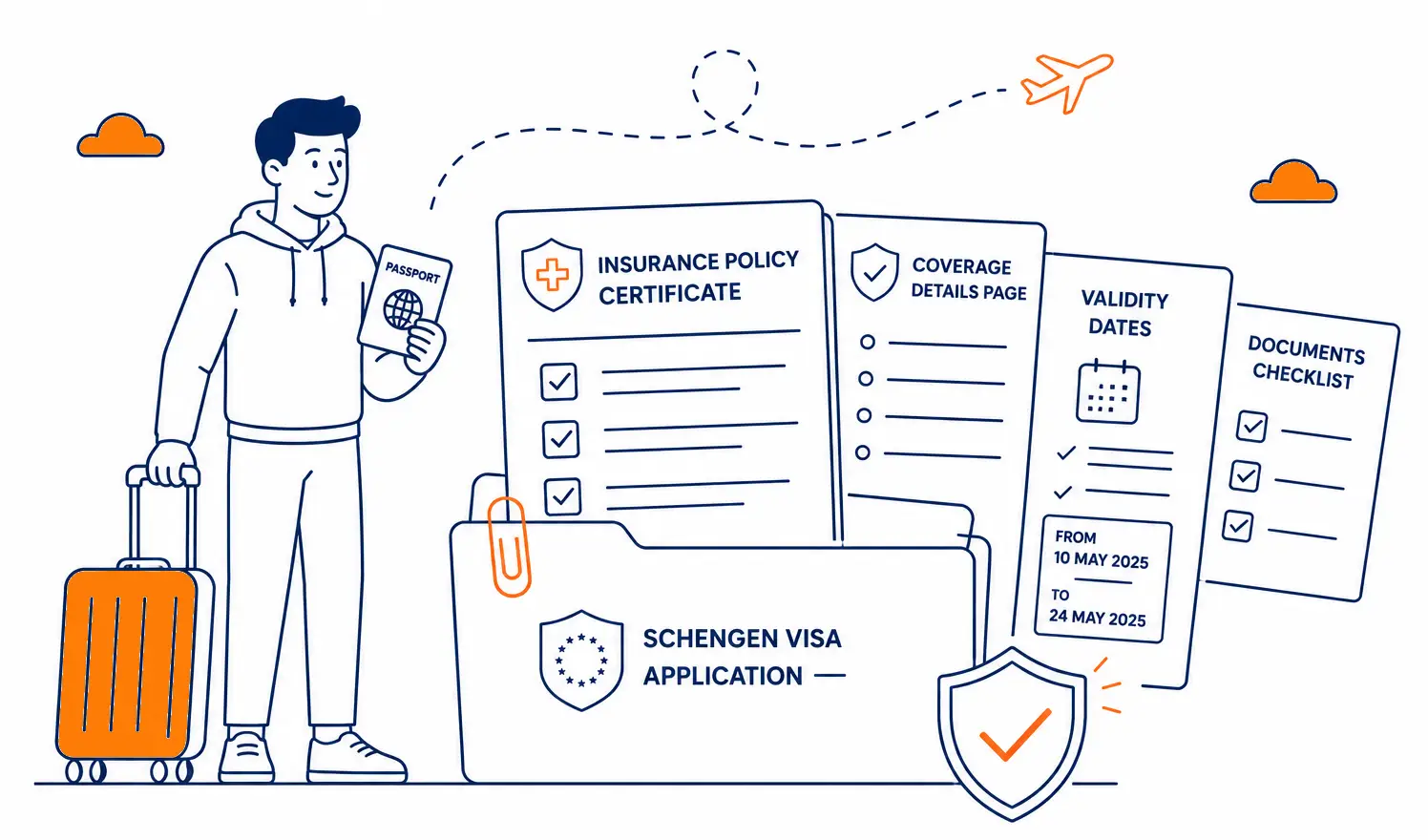

Insurance Policy Certificate

Coverage Details Page

Applicant's Passport

Validity Dates
These documents must be submitted along with the visa application.
Frequently Asked Questions
What is Schengen Visa Insurance?
Schengen Visa Insurance is travel medical insurance that meets the insurance requirements for applying for a Schengen visa. It helps cover emergency medical expenses and other eligible travel-related risks during your visit to Schengen countries.
Is Schengen Visa Insurance mandatory for UAE residents?
Yes. Applicants who require a Schengen visa generally need travel medical insurance that complies with the visa requirements of the Schengen Area.
What is the minimum medical coverage required for Schengen Visa Insurance?
Schengen visa applicants generally need travel medical insurance with a minimum medical coverage of €30,000 for emergency medical treatment and repatriation, in accordance with Schengen visa requirements.
Which countries require Schengen Visa Insurance?
Schengen Visa Insurance is required when applying for a visa to visit countries within the Schengen Area, subject to the visa requirements applicable to your nationality.
Does Schengen Visa Insurance cover all Schengen countries?
Yes. A compliant Schengen travel insurance policy is generally valid across all participating Schengen member states during the policy period.
Can I buy Schengen Visa Insurance online in the UAE?
Yes. UAE residents can compare Schengen travel insurance plans and purchase a policy online before submitting their visa application.
Does Schengen Visa Insurance cover emergency hospital treatment?
Yes. Eligible emergency hospitalisation and medical treatment are generally covered, subject to the policy terms, coverage limits, and exclusions.
Does Schengen Insurance include emergency medical evacuation?
Many Schengen travel insurance policies include emergency medical evacuation or repatriation when medically necessary, subject to policy conditions.
Can I use one policy for multiple Schengen countries?
Yes. If your itinerary includes several Schengen countries during the same trip, one policy generally provides coverage throughout the Schengen Area.
How long should Schengen Visa Insurance remain valid?
The insurance policy should generally cover the entire duration of your stay within the Schengen Area. Always confirm the required validity period before applying.
Does Schengen Visa Insurance cover trip cancellation?
Some comprehensive Schengen travel insurance plans include trip cancellation benefits, although this is separate from the minimum visa insurance requirement.
What documents will I receive after purchasing Schengen Insurance?
Most insurers provide an insurance certificate, policy schedule, and policy wording. These documents can usually be submitted as part of your visa application.
Can I purchase Schengen Insurance at the last minute?
Yes. Many insurers issue Schengen Visa Insurance immediately after purchase, making it possible to obtain cover shortly before submitting your visa application.
Does Schengen Visa Insurance cover pre-existing medical conditions?
Coverage for pre-existing medical conditions varies by insurer. Some policies exclude them, while others may provide limited benefits subject to policy terms.
How can I compare Schengen Visa Insurance in the UAE?
Compare policies based on medical coverage, visa compliance, coverage period, medical evacuation benefits, trip cancellation benefits, premium, claims support, and policy exclusions.
Why Compare Schengen Visa Insurance Plans
Comparing plans helps you:

Embassy Compliance
Ensure the policy meets all Schengen embassy insurance requirements.

Avoid Visa Rejection
Reduce the risk of rejection due to insurance errors or missing coverage.

Correct Validity
Match insurance dates precisely with your travel itinerary.

Save Time & Cost
Choose the right plan quickly without overpaying for unnecessary benefits.
Platforms like Covermatch help travellers select Schengen-approved insurance quickly and confidently.
Schengen Visa Insurance UAE
Schengen Visa Insurance UAE is a mandatory and critical requirement for travelling to Europe. Choosing the correct, embassy-approved insurance ensures smooth visa processing, financial protection during travel, and peace of mind throughout your European journey.
Getting it right the first time avoids delays, rejections, and unnecessary stress.