Why Medical Inflation Makes Health Insurance Essential in the UAE
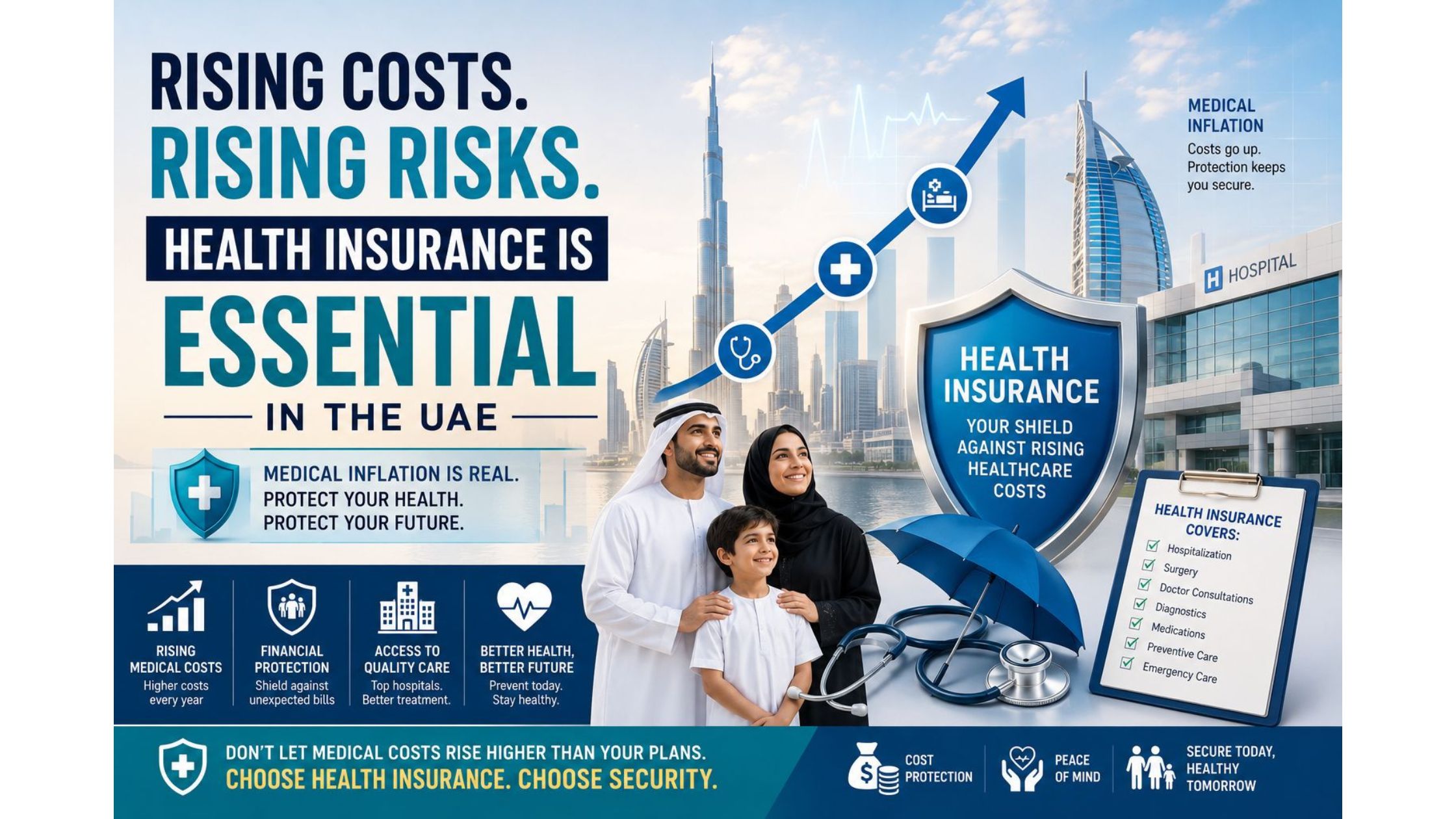
Healthcare in the UAE is among the most advanced in the world, offering state-of-the-art hospitals, cutting-edge treatments, and highly qualified medical professionals. However, this quality comes with a rising cost. Medical inflation—steady increases in healthcare expenses year after year—is making health insurance not just important, but essential for every resident in the UAE.
1. Understanding Medical Inflation in Healthcare
Medical inflation refers to the rising cost of healthcare services over time. This includes increases in:
In the UAE, where healthcare standards are premium, these costs rise faster than general inflation, directly affecting out-of-pocket expenses for patients.
2. Why Healthcare Costs Are Rising in the UAE
Several factors contribute to rising medical costs in the UAE:
As a result, even routine treatments are becoming costlier over time.
3. The Impact of Medical Inflation on Individuals
Without health insurance, individuals face increasing financial pressure. A simple hospital visit today may cost significantly more than it did a few years ago.
Common challenges include:
This makes budgeting for healthcare unpredictable and stressful.
Compare comprehensive health insurance plans tailored to your needs.
4. How Health Insurance Protects Against Rising Costs
Health insurance acts as a financial shield against inflation by covering a large portion of medical expenses. Instead of paying increasing costs directly, policyholders pay a fixed premium.
Insurance helps by:
This stability is crucial in a rapidly changing cost environment.
5. The UAE’s Premium Healthcare System and Its Cost Structure
The UAE is home to world-class healthcare facilities, especially in cities like Dubai and Abu Dhabi. Hospitals invest heavily in technology, infrastructure, and specialist care.
While this ensures high-quality treatment, it also leads to:
Health insurance ensures residents can access these facilities without financial hesitation.
6. Rising Chronic Diseases Increase Long-Term Costs
Lifestyle changes in the UAE have led to an increase in chronic conditions such as:
These conditions require ongoing treatment, medication, and monitoring—making healthcare costs even more expensive over time.
Health insurance plays a key role in managing these long-term expenses.
7. Medical Inflation and Emergency Situations
Medical emergencies are unpredictable, and costs can escalate quickly. A single accident or critical illness may involve:
Without insurance, such situations can create significant financial strain on families.
Find health insurance plans that give you and your family peace of mind.
8. How Employers Rely on Health Insurance in UAE
In the UAE, many employers provide health insurance as part of employee benefits. This is not only a legal requirement in certain emirates but also a strategic workforce investment.
For employers, insurance helps:
9. Preventive Care Helps Reduce Long-Term Costs
Health insurance is no longer just about treatment—it also supports preventive care. Many plans include:
Early detection reduces the severity of illnesses and helps control long-term healthcare expenses.
10. Why Waiting Without Insurance Is Risky
Delaying health insurance coverage in a high-inflation healthcare environment can lead to:
As medical inflation continues, the cost of being uninsured increases every year.
Medical inflation in the UAE is steadily increasing healthcare expenses across all categories—from routine check-ups to complex surgeries. In this environment, health insurance is no longer optional; it is a financial necessity.
By offering cost protection, access to quality care, and financial stability, health insurance ensures that residents can focus on recovery and wellbeing instead of worrying about rising medical bills.
