Talk to our Expert043 209 810
Insurance Plans
Compare coverage and find the best fit for you
Not sure which plan suits you?Talk to an advisor ↗

Cover Stories

Your Source for News and Guides

The Business Benefits of Workplace Injury Coverage
Featured — Jun 11, 2026
Workmen Compensation Insurance

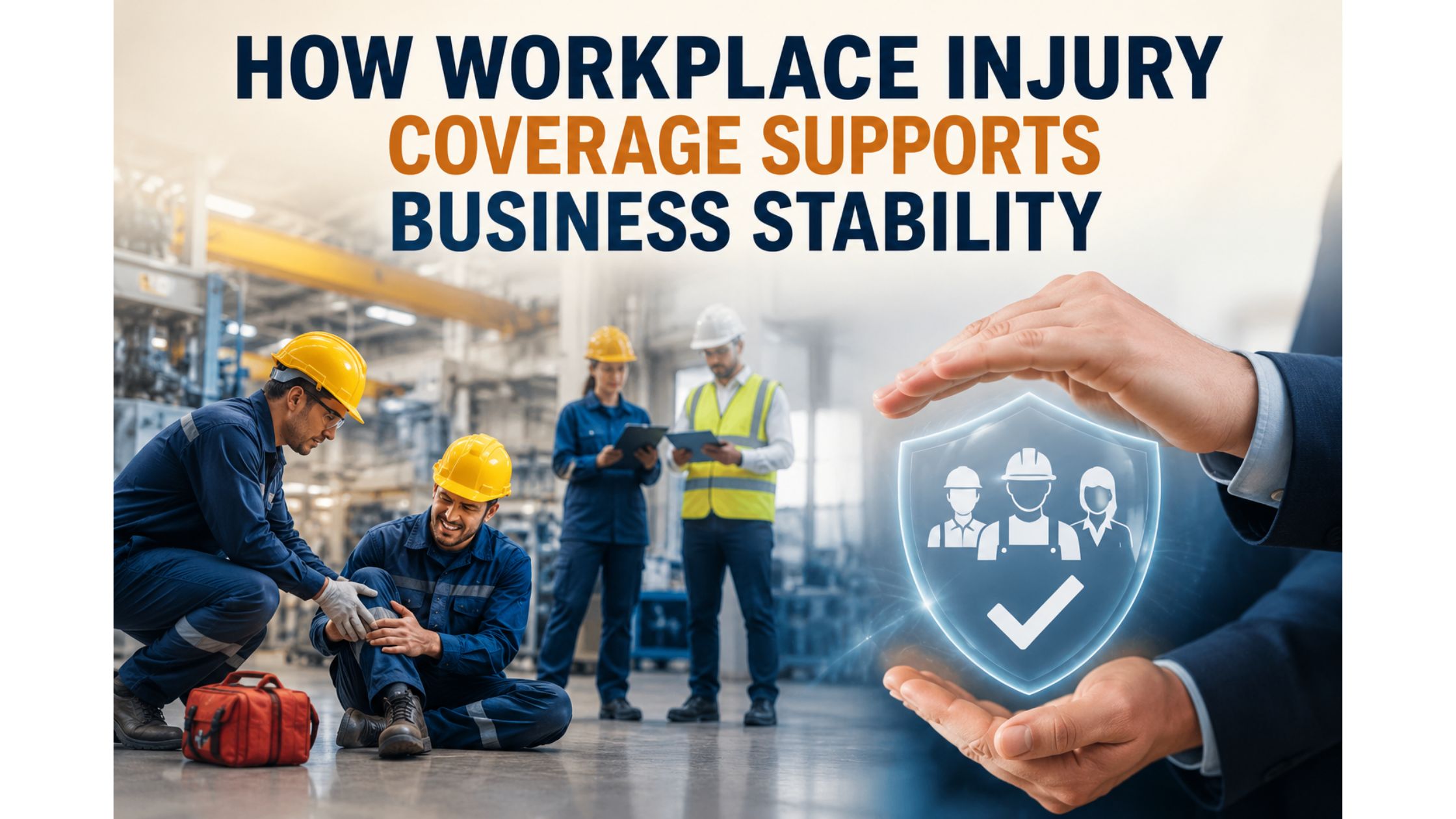
The Business Benefits of Workplace Injury Coverage

Workplace injuries are one of the most common yet overlooked risks businesses face. Whether it’s a construction site accident, a factory mishap, or even a slip-and-fall incident in an office environment, the financial and operational impact can be significant. Workplace injury coverage—commonly provided through Workmen’s Compensation Insurance—plays a crucial role in ensuring that businesses remain stable even when unexpected incidents occur.1. Reduces Financial Burden on the BusinessWhen an employee gets injured at work, the associated costs can quickly add up, including medical treatment, hospitalization, rehabilitation, and compensation for lost wages. Without insurance, these expenses must be directly covered by the employer, which can strain cash flow and disrupt financial planning. Workplace injury coverage ensures these costs are handled by the insurer, protecting the business from sudden financial shocks.2. Ensures Legal and Regulatory ComplianceIn many regions, including the UAE, employers are required to provide workplace injury protection for their employees. Failure to comply can lead to penalties, legal disputes, and reputational damage. Having proper coverage ensures that businesses meet legal obligations while avoiding unnecessary risks. It also provides peace of mind during audits or regulatory checks.3. Maintains Workforce Productivity and MoraleWhen employees feel protected, they are more confident and motivated in their work environment. Knowing that medical care and compensation are available in case of an accident improves morale and reduces workplace anxiety. Additionally, when injured employees receive timely support, they recover faster and return to work sooner, minimizing productivity loss.4. Protects Business Reputation and Employer BrandA business that takes care of its employees builds a strong reputation in the market. On the other hand, mishandling workplace injuries can lead to negative publicity and reduced trust among clients and potential hires. Workplace injury coverage demonstrates responsibility and commitment to employee welfare, strengthening the employer brand and supporting long-term growth.5. Supports Long-Term Business ContinuityUnexpected workplace accidents can disrupt operations, especially in small and medium-sized businesses. By transferring financial risk to an insurance provider, companies can maintain operational stability even during crises. This allows business owners to focus on recovery and continuity rather than financial stress, ensuring the organization stays resilient in the long run.Workplace injury coverage is not just an insurance requirement—it is a strategic tool for business stability. It protects finances, ensures compliance, boosts employee confidence, and strengthens reputation. For businesses aiming for sustainable growth, investing in Workmen’s Compensation Insurance is a critical step toward long-term security and operational resilience. 

Read the full briefing

Protect your employees and your business.

Manufacturing Industry Risks and the Need for Workmen’s Compensation Insurance
Workmen Compensation InsuranceJun 11, 2026

Manufacturing Industry Risks and the Need for Workmen’s Compensation Insurance

Manufacturing is one of the most dynamic yet high-risk industries. From heavy machinery and production lines to chemical exposure and manual handling, employees often work in environments where the likelihood of accidents is significantly higher than in other sectors. This makes Workmen’s Compensation Coverage not just important—but essential—for manufacturing businesses aiming to operate safely, legally, and sustainably. 1. High-Risk Work Environment Requires Strong ProtectionManufacturing facilities involve continuous interaction with machinery, tools, and industrial processes that can cause serious injuries if not managed properly. Even with strict safety protocols, accidents such as cuts, burns, fractures, or equipment-related incidents can still happen. Workmen’s Compensation Insurance ensures that employees receive medical care and financial support immediately after such incidents, reducing the burden on both workers and employers. 2. Financial Protection Against Costly ClaimsWorkplace injuries in manufacturing can result in significant financial liabilities, including hospital bills, rehabilitation costs, disability compensation, and legal expenses. Without insurance, these costs fall directly on the business and can severely impact cash flow. Workmen’s Compensation Coverage transfers this financial risk to the insurer, helping manufacturers maintain stability even during unexpected incidents. 3. Ensures Compliance with Legal RequirementsIn the UAE and many other regions, employers in industrial sectors are required to provide adequate workplace injury protection. Non-compliance can lead to penalties, legal action, and potential suspension of operations. Having Workmen’s Compensation Insurance ensures manufacturers meet regulatory obligations while maintaining smooth business operations and avoiding legal complications. 4. Improves Employee Safety and MoraleEmployees are more confident and productive when they know they are protected in case of workplace accidents. Offering Workmen’s Compensation Coverage shows that the company values worker safety and well-being. This not only improves morale but also helps in retaining skilled workers, reducing turnover in a highly competitive manufacturing workforce. 5. Supports Business Continuity and ProductivityAccidents in manufacturing can disrupt production lines, delay orders, and affect supply chains. By ensuring injured employees receive quick medical attention and compensation, businesses can minimize downtime and maintain operational continuity. Insurance also allows management to focus on recovery and process improvement rather than financial strain. 6. Strengthens Company Reputation and Client TrustManufacturers often work with international clients and large contracts where safety standards and compliance are closely evaluated. Having Workmen’s Compensation Coverage enhances credibility and demonstrates responsible business practices. This can improve client trust, strengthen partnerships, and increase opportunities for long-term contracts.Workmen’s Compensation Coverage is a critical pillar for manufacturing businesses. It protects employees, reduces financial risk, ensures compliance, and supports uninterrupted operations. In an industry where risks are unavoidable, the right insurance coverage is not just a safety net—it is a foundation for sustainable growth and long-term success. 

The Increasing Need for Strong Workplace Safety Frameworks
Workmen Compensation InsuranceJun 11, 2026

The Increasing Need for Strong Workplace Safety Frameworks

Workplace environments are evolving rapidly due to new technologies, changing regulations, and increasing awareness of employee well-being. As businesses grow more complex, so do the risks associated with daily operations. This has made workplace protection programs—covering safety measures, employee training, and insurance solutions like Workmen’s Compensation—more important than ever. 1. Rising Awareness of Employee Safety and Well-beingModern businesses are placing greater emphasis on protecting their workforce, not just as a legal requirement but as a core value. Employees today expect safer working conditions and stronger support systems. Workplace protection programs help organizations build a culture of safety where risks are actively managed, and employee well-being is prioritized. 2. Increasing Workplace Risks Across IndustriesFrom construction and manufacturing to logistics and healthcare, workplace risks are becoming more diverse and unpredictable. Even office environments are not risk-free, with issues like ergonomic injuries and accidents still occurring. Protection programs help businesses identify potential hazards early and implement preventive measures to reduce incidents. 3. Regulatory Pressure and Compliance RequirementsGovernments and regulatory bodies are tightening workplace safety standards across many sectors, including in regions like the UAE. Employers are required to maintain proper safety policies and insurance coverage to avoid penalties and legal consequences. Workplace protection programs ensure businesses stay compliant while maintaining smooth operations. 4. Financial Stability Through Risk ReductionWorkplace accidents can lead to unexpected costs such as medical expenses, compensation claims, legal fees, and operational downtime. Protection programs, including insurance coverage, help reduce the financial burden by transferring risk and ensuring timely support for affected employees. This allows businesses to maintain financial stability even during crises. 5. Improved Productivity and Employee RetentionA safe and well-structured workplace leads to higher employee morale, better productivity, and lower turnover rates. When employees feel protected, they are more engaged and confident in their roles. Workplace protection programs contribute to a positive work culture where employees are more likely to stay and grow with the organization. 6. Strengthening Business Reputation and TrustCompanies that invest in workplace protection are seen as responsible and reliable employers. This not only enhances internal culture but also strengthens external reputation among clients, partners, and stakeholders. In competitive industries, a strong safety record can become a key differentiator for winning contracts and attracting top talent.The importance of workplace protection programs continues to grow as businesses face increasing risks, stricter regulations, and higher employee expectations. These programs are no longer optional—they are essential for long-term stability, compliance, and growth. By investing in safety and insurance solutions, businesses can protect their people, finances, and future. 

Support your workforce with confidence.

More Reading
Building Business Resilience with Workmen’s Compensation Insurance
Workmen Compensation InsuranceJun 11, 2026

Building Business Resilience with Workmen’s Compensation Insurance

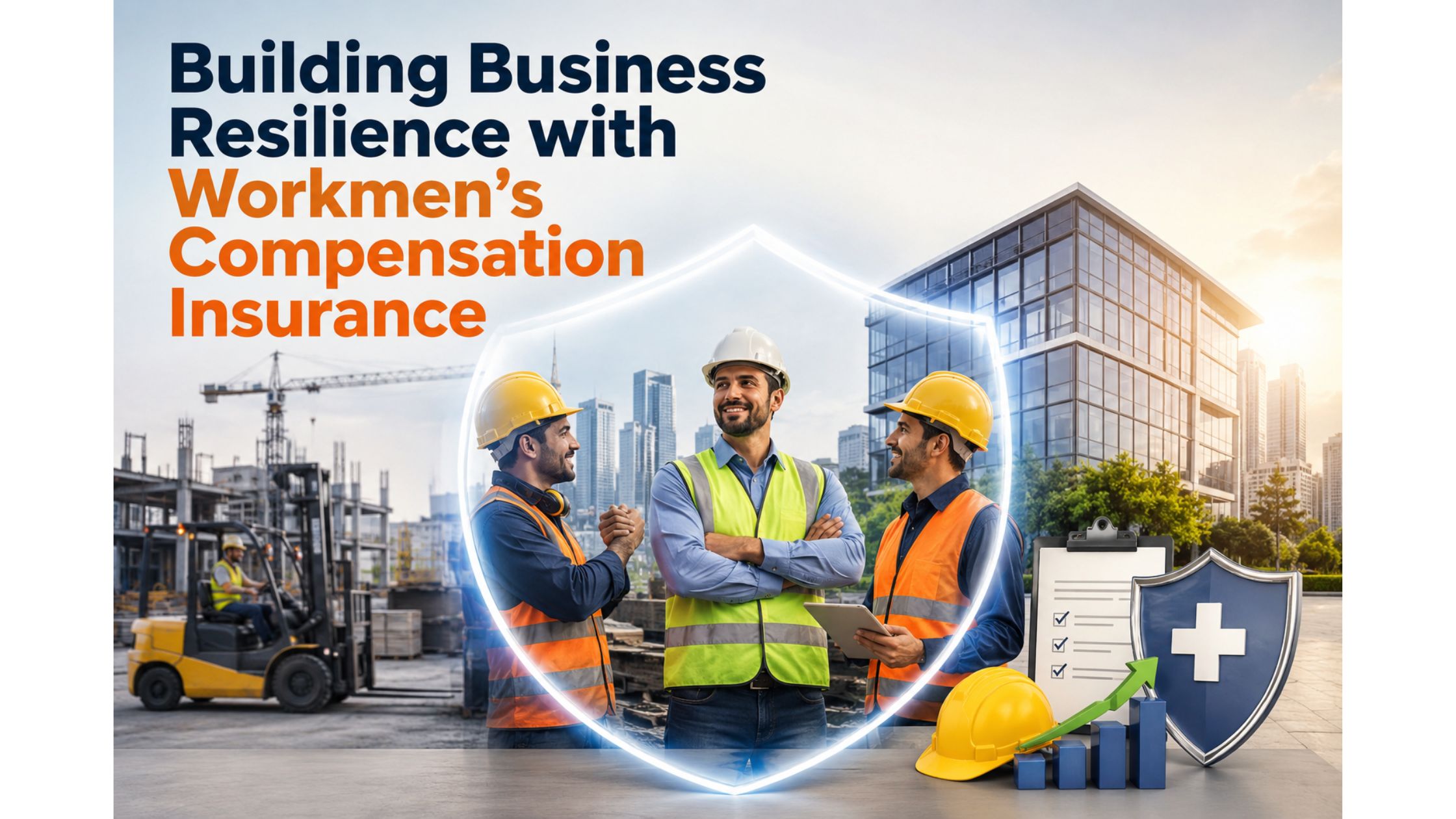
Workmen’s Compensation Insurance is often viewed as a regulatory requirement or a basic workplace safety measure. However, forward-thinking businesses understand that it is much more than compliance—it is a long-term strategic investment that supports financial stability, employee trust, and sustainable growth. In today’s competitive business environment, protecting your workforce is directly linked to protecting your business future. 1. Strengthens Financial Risk ManagementWorkplace accidents can result in significant financial liabilities, including medical expenses, compensation payouts, and legal costs. For businesses operating in high-risk industries, these costs can quickly become overwhelming. Workmen’s Compensation Insurance transfers this financial risk to the insurer, allowing companies to maintain predictable expenses and safeguard cash flow in the long run. 2. Ensures Business Continuity and StabilityUnexpected workplace injuries can disrupt operations, especially in sectors like construction, manufacturing, and logistics. When employees are injured, productivity can slow down or even halt. With proper insurance coverage, businesses can manage these disruptions more effectively, ensuring injured employees receive support while operations continue with minimal financial strain. 3. Enhances Employee Trust and RetentionEmployees are more likely to stay loyal to organizations that prioritize their safety and well-being. Offering Workmen’s Compensation Insurance demonstrates that the employer values its workforce beyond productivity. This builds trust, improves morale, and reduces employee turnover—saving recruitment and training costs over time. 4. Supports Legal Compliance and Reduces Liability RisksIn many regions, including the UAE, employers are required to provide workplace injury protection. Non-compliance can result in penalties, lawsuits, and reputational damage. By maintaining Workmen’s Compensation Insurance, businesses ensure they meet legal obligations while minimizing exposure to liability risks that could impact long-term operations. 5. Improves Corporate Reputation and Business OpportunitiesCompanies with strong employee protection policies are viewed as responsible and trustworthy partners. This reputation can play a key role in securing contracts, especially with large corporations and government entities that prioritize compliance and safety standards. Over time, this enhances business credibility and opens doors to new opportunities. 6. Builds a Foundation for Sustainable GrowthLong-term business success depends on stability, risk control, and workforce confidence. Workmen’s Compensation Insurance contributes to all three by reducing uncertainty, protecting employees, and ensuring smooth operations during crises. It allows businesses to focus on expansion and innovation without being constantly exposed to financial shocks from workplace incidents.Workmen’s Compensation Insurance is not just a protective measure—it is a strategic business tool. By integrating it into long-term planning, companies can strengthen financial resilience, improve employee satisfaction, ensure compliance, and build a strong foundation for sustainable growth. Businesses that prioritize workforce protection today are better positioned for success tomorrow. 

READ THE FULL BRIEFING
Workplace Accidents and Financial Protection for Employers
Workmen Compensation InsuranceMay 30, 2026

Workplace Accidents and Financial Protection for Employers

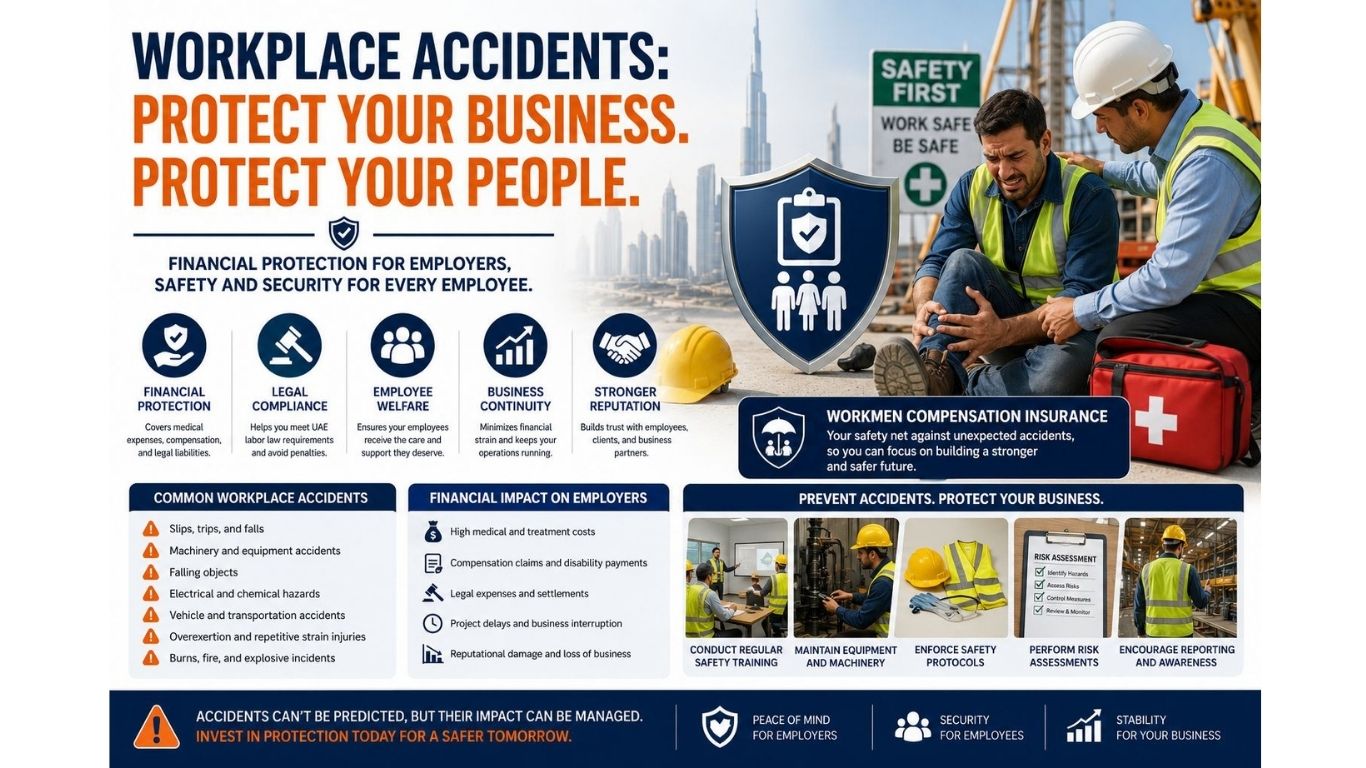
Workplace accidents are one of the biggest operational and financial risks businesses can face. No matter the industry, accidents can occur unexpectedly and may result in employee injuries, property damage, legal liabilities, and business disruptions. In the UAE, where industries such as construction, manufacturing, logistics, hospitality, and facility management employ large workforces, workplace safety and financial protection have become critical responsibilities for employers.A single workplace accident can create significant financial pressure on a company. Medical expenses, compensation claims, legal costs, project delays, and reputational damage can affect business stability and profitability. This is why employers must not only focus on workplace safety measures but also secure proper insurance coverage to protect their business from unexpected financial losses.Workmen Compensation Insurance plays an essential role in helping employers manage these risks while ensuring employee welfare and legal compliance.Understanding Workplace AccidentsA workplace accident refers to any unexpected incident that occurs during employment and results in injury, illness, disability, or even death. These accidents may happen due to unsafe working conditions, equipment failure, human error, or operational hazards.Common workplace accidents include:Slips, trips, and fallsConstruction site injuriesMachinery-related accidentsElectrical accidentsFalling objectsChemical exposureBurns and fire incidentsVehicle and transportation accidentsRepetitive strain injuriesWorkplace fatigue-related incidentsIndustries involving physical labor or hazardous environments generally face higher accident risks, making financial protection even more important.Financial Impact of Workplace Accidents on EmployersWorkplace accidents can lead to serious financial consequences for businesses. Even minor incidents may result in unexpected expenses and operational disruptions.Medical and Treatment CostsEmployers may be responsible for covering emergency medical treatment, hospitalization, surgeries, rehabilitation, and ongoing healthcare expenses for injured employees. Serious injuries can lead to extremely high medical costs.Compensation ClaimsEmployees injured during work may file compensation claims for lost wages, disability benefits, or long-term medical support. These claims can place substantial financial strain on employers without proper insurance coverage.Legal ExpensesIn some cases, workplace accidents may lead to legal disputes or investigations. Employers may need to pay legal defense costs, settlement expenses, or court-ordered compensation.Business InterruptionMajor workplace incidents can temporarily stop operations, delay projects, reduce productivity, and affect customer commitments. Construction delays and operational shutdowns may lead to additional financial losses.Reputational DamageFrequent workplace accidents can negatively affect a company’s reputation, employee trust, and business relationships. Clients and investors may question the organization’s safety standards and risk management practices.Importance of Financial Protection for EmployersFinancial protection helps businesses remain stable and operational even after workplace accidents occur. Employers who invest in insurance coverage and risk management strategies are better prepared to handle unexpected situations.Proper financial protection offers several benefits:Reduces out-of-pocket expensesSupports business continuityProtects company assetsEnsures employee welfareImproves compliance with labor lawsStrengthens employer reputationProvides peace of mind for managementWithout adequate protection, even a single serious accident can create long-term financial challenges for a business.Role of Workmen Compensation InsuranceWorkmen Compensation Insurance is one of the most important forms of protection for employers in the UAE. This insurance provides financial coverage for employee injuries, disabilities, medical expenses, and compensation claims arising from workplace accidents.The policy helps employers fulfill their legal responsibilities while protecting their business from large financial liabilities.What Workmen Compensation Insurance Typically CoversCoverage may vary depending on the insurer and policy terms, but common benefits include:Medical treatment expensesHospitalization costsDisability compensationDeath benefitsLost wage compensationRehabilitation expensesLegal liability coverageRepatriation expenses in some casesThis insurance ensures injured employees receive financial support while reducing the employer’s financial burden.Industries with Higher Workplace Accident RisksCertain industries in the UAE face greater workplace safety challenges due to the nature of their operations.Construction IndustryConstruction sites involve heavy machinery, heights, electrical systems, and hazardous materials, making accidents more likely.Manufacturing IndustryFactory workers may face machinery injuries, burns, chemical exposure, and repetitive strain risks.Logistics and TransportationDrivers, warehouse workers, and delivery staff face risks related to lifting injuries, vehicle accidents, and loading operations.Oil and Gas SectorThis industry involves high-risk environments with fire hazards, explosions, and technical equipment risks.Facility Management and MaintenanceCleaning, maintenance, and technical service workers often operate in physically demanding and potentially hazardous conditions.How Employers Can Reduce Workplace Accident RisksWhile insurance provides financial protection, accident prevention remains equally important. Employers should implement effective workplace safety measures to minimize risks.Conduct Safety TrainingRegular employee training helps workers understand safety procedures, hazard prevention, and emergency response measures.Maintain Equipment ProperlyRoutine inspection and maintenance of machinery and tools can reduce equipment-related accidents.Enforce Safety ProtocolsProviding protective equipment and enforcing workplace safety rules helps create a safer work environment.Perform Risk AssessmentsIdentifying workplace hazards early allows businesses to take preventive actions before accidents occur.Encourage ReportingEmployees should feel comfortable reporting unsafe conditions or near-miss incidents to prevent future accidents.Legal and Regulatory Importance in UAEUAE labor laws emphasize employee welfare and workplace safety. Employers are expected to provide a safe working environment and fulfill compensation responsibilities in the event of work-related injuries.Having Workmen Compensation Insurance helps businesses comply with legal obligations while demonstrating commitment to employee protection.Failure to provide adequate coverage or maintain workplace safety standards may lead to penalties, legal disputes, or reputational harm.Choosing the Right Insurance CoverageWhen selecting Workmen Compensation Insurance, employers should carefully evaluate:Coverage limitsIndustry-specific risksEmployee workforce sizeClaims handling processLegal support servicesPolicy exclusionsInsurer reputationAdditional liability coverage optionsChoosing comprehensive protection ensures better financial security for both employers and employees.Workplace accidents can happen unexpectedly and may create serious financial and operational challenges for businesses. Medical expenses, legal claims, compensation payments, and business disruptions can significantly affect an employer’s financial stability.Workmen Compensation Insurance provides essential financial protection by helping employers manage these risks while supporting employee welfare and legal compliance. Combined with strong workplace safety practices, the right insurance coverage helps businesses operate with greater confidence and resilience.For employers in the UAE, protecting employees is not only a legal responsibility but also a smart business decision that contributes to long-term stability, trust, and growth. 

READ THE FULL BRIEFING
Compensation Insurance for Multi-Location Businesses UAE
Workmen Compensation InsuranceMay 30, 2026

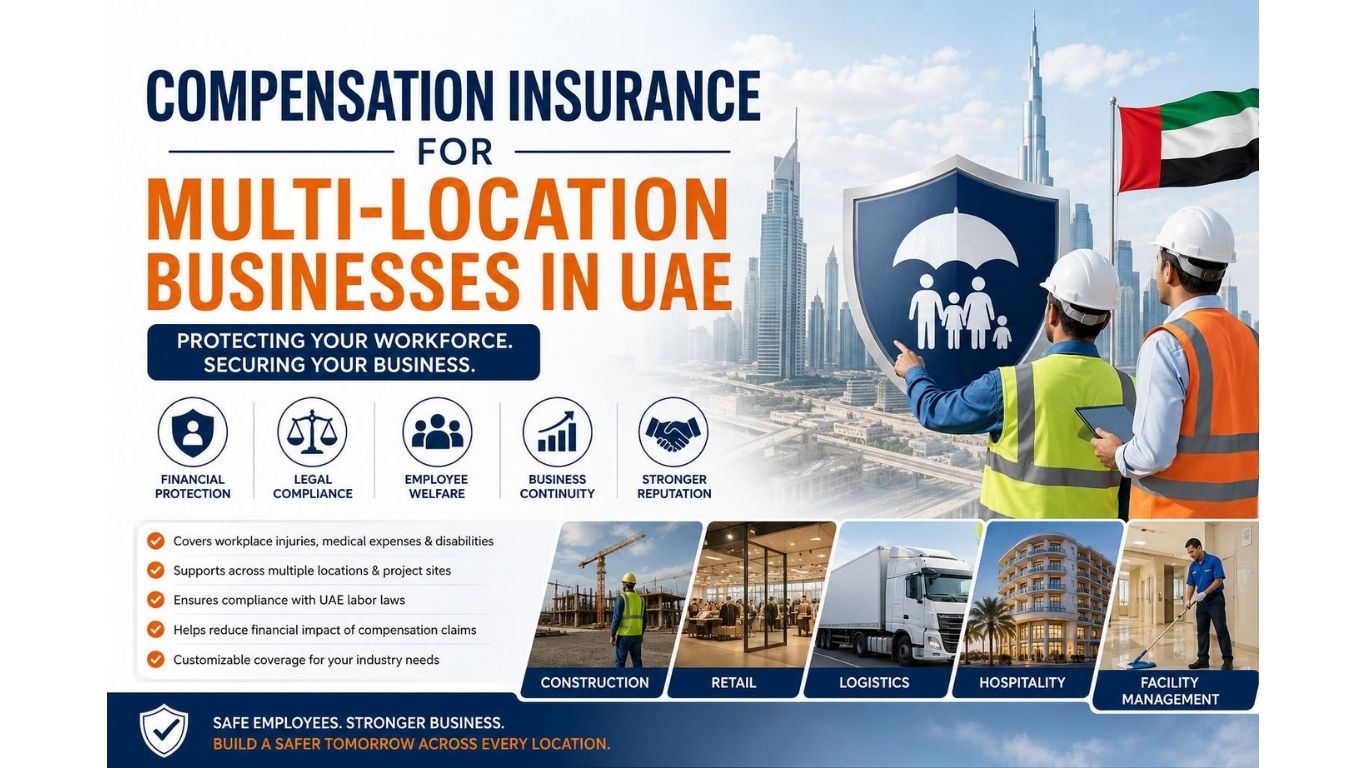
Compensation Insurance for Multi-Location Businesses UAE

Businesses operating across multiple locations in the UAE face unique operational and workforce management challenges. Whether it is a construction company with projects in different emirates, a retail chain with multiple branches, or a logistics company managing warehouses across the country, maintaining employee safety and legal compliance becomes more complex as operations expand.One of the most important protections for such businesses is Workmen Compensation Insurance. Multi-location businesses often employ a large and diverse workforce exposed to varying workplace risks depending on the nature of each site or branch. Compensation insurance helps protect both employers and employees by providing financial support in the event of workplace injuries, accidents, or occupational illnesses.For businesses operating across Dubai, Abu Dhabi, Sharjah, and other emirates, having comprehensive compensation insurance is not just a smart risk management strategy — it is an essential part of responsible business operations in the UAE.What Is Compensation Insurance?Compensation insurance, commonly referred to as Workmen Compensation Insurance, provides financial protection for employers against liabilities arising from employee workplace injuries or accidents.The policy is designed to cover costs related to:Employee medical treatmentHospitalization expensesDisability compensationLost wagesRehabilitation costsDeath benefitsLegal liabilities related to workplace injuriesThis insurance ensures employees receive proper financial support while helping businesses avoid major financial losses from compensation claims.Why Multi-Location Businesses Face Higher RisksBusinesses operating in multiple locations often deal with different working environments, operational standards, and workforce structures. Managing safety consistently across all branches or project sites can be challenging.Several factors increase risk exposure for multi-location businesses:Larger workforce sizeDifferent workplace conditionsVarying operational hazardsMultiple project sitesIncreased travel and transportation risksDifficulty maintaining uniform safety standardsHigher employee movement between locationsBecause of these factors, even small incidents across different sites can result in multiple claims and significant financial impact.Industries Commonly Operating Across Multiple Locations in UAEMany industries in the UAE operate through multiple branches, offices, or project locations.Construction CompaniesConstruction businesses often manage several projects simultaneously across different emirates. Each site may involve heavy equipment, labor-intensive work, and high-risk activities.Retail ChainsRetail businesses with multiple stores employ large numbers of staff exposed to risks such as slips, lifting injuries, and workplace accidents.Logistics and Transportation CompaniesWarehouses, delivery operations, and transportation services operating nationwide face employee injury risks related to loading, driving, and material handling.Hospitality GroupsHotels, restaurants, and tourism businesses operating across different locations require consistent employee protection measures.Facility Management CompaniesCleaning, maintenance, and technical service providers often deploy workers across multiple buildings and client sites.Importance of Compensation Insurance for Multi-Location BusinessesFinancial Protection Across All LocationsA single serious accident at one branch or project site can create large financial liabilities for a company. Compensation insurance helps cover medical costs, legal expenses, and employee compensation claims across all insured locations.Legal Compliance in UAEEmployers in the UAE are responsible for employee welfare and workplace safety. Having proper compensation insurance helps businesses meet labor law obligations and regulatory requirements.Employee Confidence and WelfareEmployees feel more secure knowing they are financially protected in case of workplace injuries. This improves morale, trust, and overall workplace confidence.Business ContinuityUnexpected workplace accidents can disrupt operations and create financial strain. Insurance support helps businesses recover more efficiently without severely affecting cash flow.Reputation ManagementCompanies with proper employee protection policies demonstrate professionalism and responsible business practices. This can strengthen relationships with clients, investors, and business partners.Coverage Offered Under Compensation InsuranceCoverage varies depending on the insurer and policy terms, but common protections include:Workplace injury compensationEmergency medical treatmentHospitalization and surgery expensesPermanent or temporary disability benefitsDeath compensation benefitsOccupational illness coverageRehabilitation expensesLegal liability protectionSome insurers may also provide customized coverage options for specific industries or operational risks.Challenges in Managing Employee Safety Across Multiple LocationsInconsistent Safety StandardsDifferent branches or sites may follow varying safety procedures, increasing the possibility of accidents.Communication GapsLarge businesses sometimes struggle to communicate safety policies effectively across all locations.Employee TurnoverIndustries with frequent staff movement may face challenges in maintaining consistent safety training.Site-Specific HazardsEach location may have unique risks depending on the operational environment and industry.Proper insurance coverage acts as a financial safeguard when these operational challenges lead to workplace incidents.How Businesses Can Reduce Compensation ClaimsWhile compensation insurance offers financial protection, prevention remains extremely important.Standardize Safety ProceduresBusinesses should implement consistent workplace safety protocols across all locations.Conduct Regular TrainingFrequent employee training programs help improve hazard awareness and emergency response readiness.Perform Site InspectionsRoutine safety inspections help identify and address workplace hazards before accidents occur.Maintain Accurate DocumentationKeeping proper employee records, safety reports, and incident documentation helps during insurance claims and legal reviews.Encourage Workplace Safety CultureEmployees should be encouraged to report unsafe conditions and follow company safety guidelines actively.Factors Affecting Compensation Insurance PremiumsInsurance costs for multi-location businesses depend on several factors, including:Number of employeesNature of business operationsIndustry risk levelClaims historyGeographic spread of operationsSafety measures implementedCoverage limits selectedBusinesses operating in high-risk industries or employing large labor forces may face higher premiums due to increased liability exposure.Choosing the Right Compensation Insurance PolicyBefore selecting coverage, businesses should evaluate:Multi-location coverage flexibilityIndustry-specific protectionsClaims handling efficiencyLegal support servicesCoverage exclusionsInsurer reputationPolicy scalability for future growthComprehensive protection ensures businesses remain financially secure as operations expand.Multi-location businesses in the UAE face greater workforce management and operational risks due to the complexity of managing employees across different branches, project sites, or facilities. Workplace accidents can lead to medical expenses, compensation claims, legal liabilities, and operational disruptions that may significantly affect business stability.Compensation insurance provides essential financial protection for employers while ensuring employees receive the support they need after workplace injuries. Combined with strong safety practices and proper risk management, the right insurance coverage helps businesses operate confidently and responsibly across all locations in the UAE.For growing businesses with operations spread across multiple emirates, compensation insurance is not just a legal requirement — it is a critical investment in long-term business protection and workforce welfare. 

READ THE FULL BRIEFING
Key Features of Modern Compensation Insurance Policies
Workmen Compensation InsuranceMay 30, 2026

Key Features of Modern Compensation Insurance Policies

Workplace risks are evolving rapidly as businesses adopt new technologies, expand operations, and employ diverse workforces across multiple industries. In this changing environment, modern Compensation Insurance policies have become more advanced, flexible, and comprehensive compared to traditional coverage.In the UAE, where industries such as construction, logistics, manufacturing, hospitality, and services employ large workforces, employers are increasingly relying on updated insurance solutions to protect employees and manage financial risks effectively. Modern Compensation Insurance is designed not only to cover workplace injuries but also to support employers with faster claims processing, better compliance, and improved risk management.What Is Compensation Insurance?Compensation Insurance, also known as Workmen Compensation Insurance, provides financial protection to employers against liabilities arising from employee injuries, illnesses, or fatalities caused during work.It typically covers:Medical expensesHospitalization costsDisability compensationLost wagesRehabilitation supportDeath benefitsLegal liability expensesModern policies, however, go beyond basic coverage and include enhanced features designed for today’s complex work environments.1. Comprehensive Employee CoverageOne of the key features of modern Compensation Insurance policies is broader employee coverage. These policies are designed to protect:Full-time employeesContract workersTemporary staffPart-time employeesSite-based workersThis ensures that businesses are protected regardless of employment type, which is especially important for industries with flexible or project-based staffing models.2. Enhanced Medical Expense CoverageModern policies offer improved coverage for medical treatment, including:Emergency careHospitalization and surgerySpecialist consultationsRehabilitation and physiotherapyThis ensures that injured employees receive timely and high-quality medical care without financial delays, while employers are protected from rising healthcare costs.3. Faster and Digital Claims ProcessingDigital transformation has significantly improved how compensation claims are handled. Modern insurance providers in the UAE now offer:Online claims submissionReal-time claim trackingAutomated claim verificationFaster settlement processingThis reduces administrative delays and ensures quicker financial support for injured employees.4. Inclusion of Occupational DiseasesUnlike traditional policies, modern Compensation Insurance also covers occupational illnesses caused by workplace exposure.These may include:Respiratory diseasesChemical exposure-related conditionsHearing loss due to industrial environmentsRepetitive strain injuriesThis feature is particularly important for industries such as manufacturing, construction, and healthcare.5. Legal Liability ProtectionModern policies provide stronger legal support for employers in case of disputes or claims. Coverage may include:Legal defense costsCourt feesSettlement expensesCompensation payouts ordered by courtsThis helps businesses manage legal risks more effectively and reduces financial pressure during litigation.6. Flexible Coverage for Multiple LocationsMany UAE businesses operate across multiple branches or project sites. Modern Compensation Insurance policies offer:Multi-location coverageCentralized policy managementUnified employee protection across sitesThis simplifies insurance administration for large organizations and ensures consistent protection across all operations.7. Customizable Industry-Based CoverageModern insurance solutions are tailored to specific industries, allowing businesses to select coverage based on operational risks.Examples include:High-risk construction coverageLogistics and transportation risk protectionHospitality and retail employee coverageIndustrial manufacturing protectionThis customization ensures businesses only pay for relevant risks while maintaining adequate protection.8. Disability and Long-Term Benefit CoverageModern policies provide enhanced compensation for:Temporary disabilityPermanent disabilityPartial disabilityLong-term work incapacityThese benefits ensure employees receive financial stability even after serious workplace injuries.9. Death and Repatriation BenefitsIn the unfortunate event of employee death due to a workplace accident, modern policies offer:Death compensation benefitsRepatriation of remains (especially for expatriate workers in UAE)Financial support for dependentsThis feature is particularly important in the UAE’s diverse workforce environment.10. Risk Management and Safety SupportModern Compensation Insurance is not just reactive—it is preventive. Many insurers now offer:Workplace safety auditsRisk assessment servicesEmployee safety training programsAccident prevention guidanceThese services help businesses reduce workplace accidents before they occur.11. Integration with Digital PlatformsInsurTech has transformed Compensation Insurance into a more efficient system. Modern policies often include:Mobile access to policy documentsDigital employee onboardingAutomated renewal remindersIntegration with HR systemsThis makes policy management easier for HR teams and business owners.12. Scalable Coverage for Growing BusinessesAs companies expand, their workforce and risk exposure increase. Modern Compensation Insurance policies are designed to scale easily by:Adding new employees instantlyExpanding coverage to new locationsAdjusting policy limits based on business growthThis flexibility is essential for fast-growing companies in the UAE.Modern Compensation Insurance policies are designed to meet the evolving needs of today’s dynamic business environment. With features like digital claims processing, multi-location coverage, occupational disease protection, and enhanced medical benefits, these policies offer comprehensive protection for both employers and employees.For businesses in the UAE, investing in modern Compensation Insurance is not just about compliance—it is about building a safer, more resilient workforce and ensuring financial stability in the face of unexpected workplace risks.As industries continue to grow and diversify, having a flexible and feature-rich compensation insurance policy will remain a key part of effective risk management and responsible business operations. 

READ THE FULL BRIEFING